Tag: lock

  • Why Your Key Snap?

    Why Your Key Snap?

    No matter what quality your key is, even the best and thickest silver-nickel alloy, it will still snap if the below situation occurs.

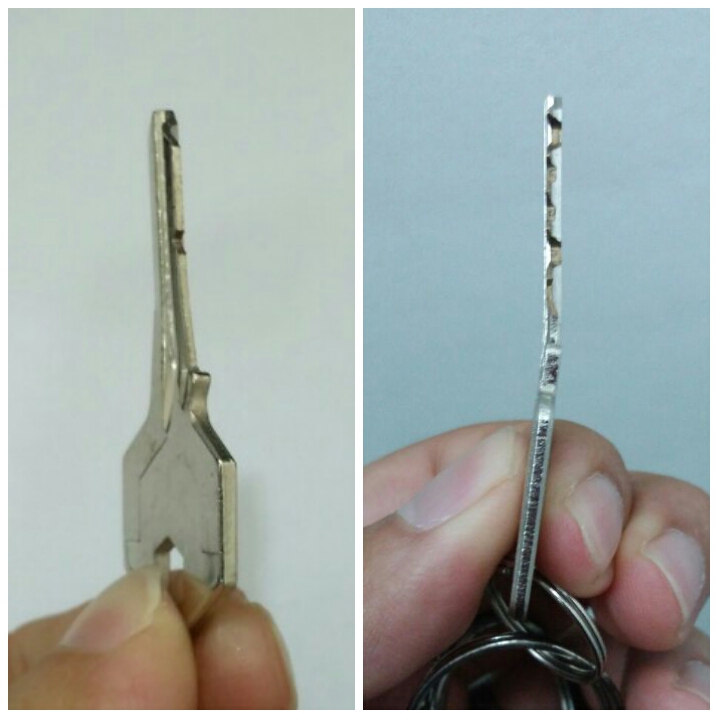
    1. Lock not smooth/ stuck/ grinding/ badly installed. Usually sign is like the left photo, key twisted.

    • This might happens if the lock is of bad quality, some really cheap locks usually made in China. Or,
    • Badly installed locks, causes the bolt/ latch can’t really fit perfectly into the strike hole. So when lock or unlock, the bolt is actually grinding the strike. Or,
    • Still badly installed locks, the external and internal is not in the same horizontal or vertical line. The lock will not works smoothly and you need more force to turn the key

    2. The user used unnecessary excessive force on the key. The sign for this is bent key, not twisted.

    • Sometimes user use the key to pull the door while the key is inside the lock. The key becomes like a pull handle. 
    • If your door do not have a pull handle, install one. Must not use the key to substitute the pull handle

      Advise from Locksmith,
      www.finelockshop.com

    • Door Sometimes Just Get Swollen

      Door Sometimes Just Get Swollen

      Swollen Door

      This door expands. It keeps on expanding so after a while, it is quite bad. So once you push it to close, it is hard to open. This customer ask someone from outside to help kick to door open. And the door cracks. (UPDATES: After checking on the client’s door, just the surface laminate layer crack actually, not the whole wood wall. Inside still solid)

      Wooden door is quite hard to predict. Some expand, some shrink, some twist. And some happen to new door (can claim warranty), some happen after 1 year, some happen after 2 years, etc. 

      We are fully focused on locks, so door knowledge is somehow limited to experience only. From experience, we can guess what type of door will expand, what type of door shrinks, etc. But why? We can only guess, can’t be sure.

      We have worked with some door seller. Some just sell. Some is a contractor carpenter. They are almost the same like us, they can explain what happen to the door but is a pure guess on experience. 

      But there are a few, who are really  specialised door maker. He knows what’s wrong with the door once he sees and touches it. The differences with common carpenter is he can explain to us the technical and scientific reason behind it. Just like a teacher explaining in details.
      So for door problem sometimes we need a skillful and experienced carpenter’s advise or if better a specialised door maker’s advise. We always keep their number with us. Called them up so often that we have become friends.

      Here we list a common door-cannot-close problem:

      1. Hinge problem. It might be the hinge screw worn out or loosen, or the hinge is a bad quality type. Change the hinge (cost more than installing new door, as the workmanship involved is actually removing, and reinstalling door again, so is a “double work”)
      2. Door expand: need to plan the door or grind it
      3. Door shrink: causes the door to unable to latch. In this case the strike plate needs some extra padding to thicken it so that it can catch the door latch.
      4. Door twist: can opt to readjust strike plate, or readjust hinge alignment 
      5. Door joint problem : the door spine/ bone joint is no longer strong, causes the door to drop in shape. Need special angle steel plate to lift and strengthen the joint.

      Advise from locksmith,
      www.finelockshop.com

    • Deadbolt + Hammer = Burglared

      Deadbolt + Hammer = Burglared


      *(Well not exactly hammer, because that will make a lot of noise)
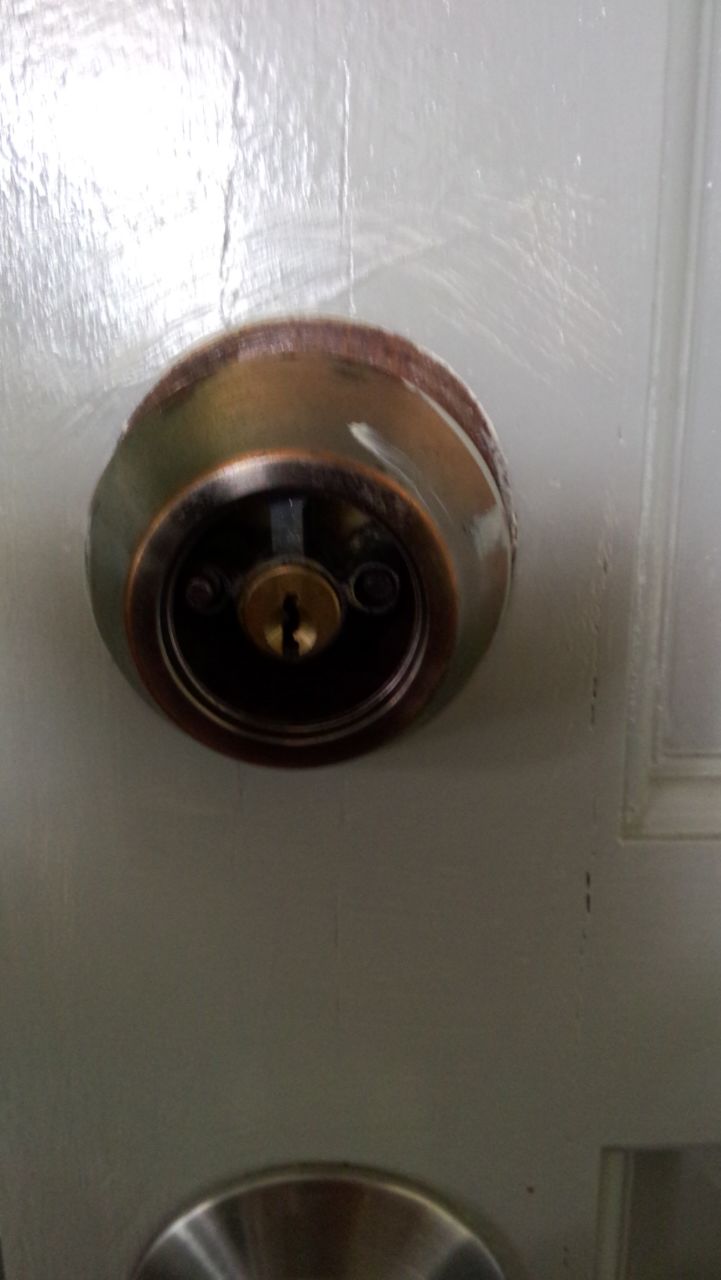
      A cheap deadbolt get burglared. No damage to the keyway, so the only way is the internal part inside and turn a spindle with screwdriver.

      Usually the easy way is to use a hammer. But in this case there is no dent to the deadbolt cover.

      There are, however some dent and scratches on the door (maybe not so obvious from the dark photo). The thief must be using a flat head screwdriver, pry down the deadbolt, then use the same screwdriver to just turn the spindle behind.

      Guess what, when ask the owner, indeed he put some handy tools outside the house, including a flat head screwdriver.

      What can we learn from this case?

      In some frequent cases, the thief comes empty handed, so your neighborhood doesn’t realise. 

      “This is not a thief! Because he doesn’t have any tools or bag. How can he enter a house empty-handed?”.

       He open into your door using some tools or items you put outside your home. Even some gardening tools, repairing tools, maintenance tools, etc.

      So, the today’s real equation should be:

      Deadbolt + Flat Head Screwdriver = Burglared. 

      (Better don’t put this as the headline, we don’t wanna attract too many attention)
      How about you? What do you put at the exterior compound of your house?

      Advise from Locksmith,
      www.finelockshop.com/blog

    • How Deadbolts Play A Role In Keeping Your Home Safe And Secure

      How Deadbolts Play A Role In Keeping Your Home Safe And Secure

      Though an alarm system or a guard dog may be helpful, locksmiths say a quality deadbolt is the best resistance to a home burglary. In most cases, Intruders use force to gain entry into a home. A deadbolt has a steel bolt that extends into the door jamb and strike plate of the door frame that makes the door harder to enter with force. If your deadbolts are used and working properly, this makes your home a less desirable target.

      The three basic parts of a deadbolt lock are a key accessible cylinder on the outside, the throw or bolt that slides in and out of the door jamb and the thumb turn that allows for manual control of the bolt from the inside of the home. All deadbolt locks should be made of steel, bronze or brass. Avoid die cast materials which can break apart.

      Types Of Deadbolts

      Single Cylinder

      The most common type of deadbolt used is a single cylinder that operates with a twist knob on the inside of the door and a keyhole on the outside. The bolt is “dead” because you have to manually move it in and out of place by means of a key or knob. This can still be breached if an entry door has glass panels since an intruder can break the glass and open the deadbolt from the inside.

      Double Cylinder

      An intruder will not be able to reach in to open the door through a broken glass panel if you have a double cylinder deadbolt. This is the most secure type of deadbolt because it requires a key to operate it on both sides of the door. Some people prefer not to use the double cylinder deadbolt due to the safety concerns of exiting the home in the event of a fire. If the deadbolt is in the locking position, a key would be required to exit which may deter a quick exit or concern if the key is lost. If you do choose to use a double cylinder deadbolt system, keep a key close by but out of arm’s reach of the door area. It’s important to note that before choosing a deadbolt, know that some fire safety and building codes forbid the installation of locks that require keys to open the door from the inside. Consult with a local contractor or locksmith before installing one.

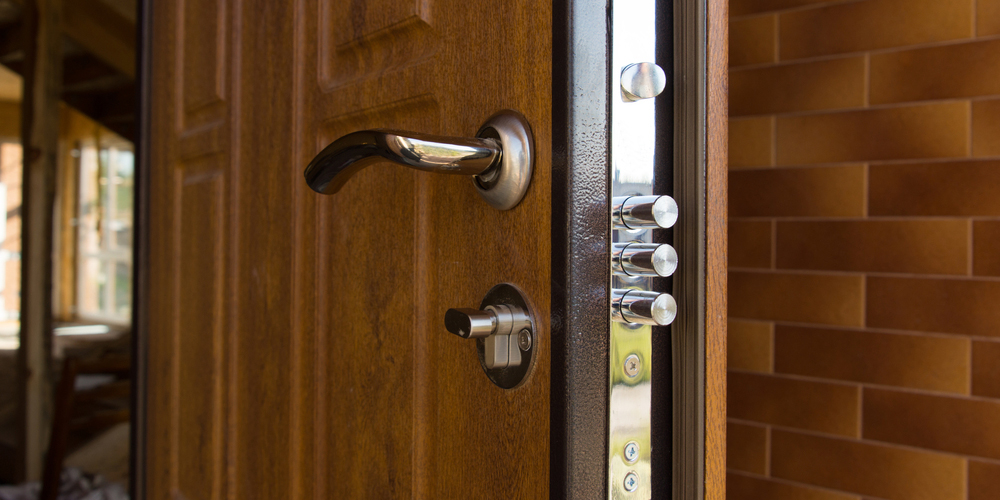
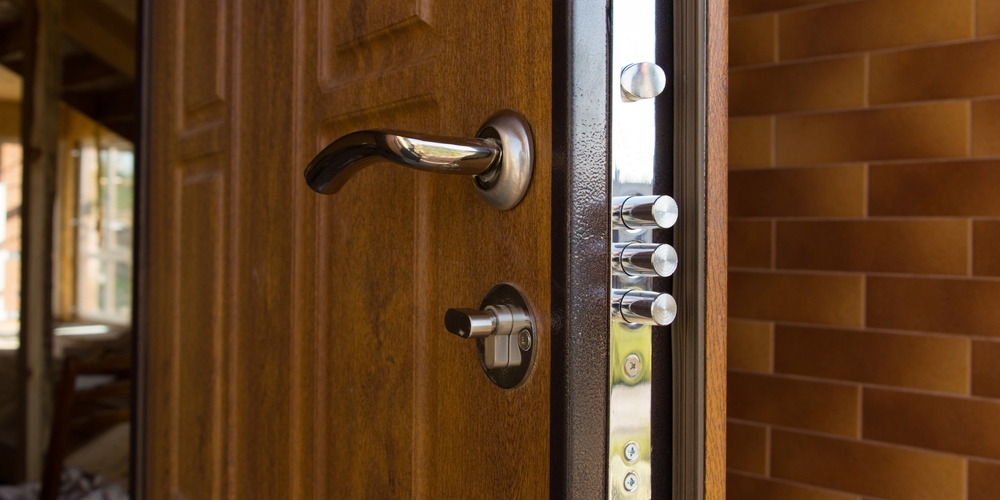
      Regarding the throw (bolt) part of the deadbolt system, consider the difference in security risk between a horizontal and vertical throw.

      Horizontal Throw

      The standard horizontal throw extends one inch beyond the edge of the door and into the jamb. This may not be enough to support the door and frame from a forced entrance by an intruder who can pry the door apart from the jamb or it’s strike plate to disengage the throw.

      Vertical Throw

      A vertical or surface mounted deadbolt engages by interlocking with a set of cast metal rings affixed to the frame of the door. The rings surrounding the bolt make this lock virtually pry-proof making a vertical throw the safer choice of the two deadbolts.

      deadbolt

      Picture Source

      http://united-locksmith.net/blog/how-deadbolts-play-a-role-in-keeping-your-home-safe-and-secure