Tag: padlock

  • Padlock & Grille: Common Break-in Method

    Padlock & Grille: Common Break-in Method

    Grille and Padlock are the most common combination used at the front or back door. From our experience, we found out the following:

    Welded padlock bracket is actually not that strong

    Why do we say so? Our technician learned some welding before, and we have also cooperated with plenty of grille welder, both stainless steel and steel. The process of welding itself actually melts some of the metal body in order to create bonding. Thus the welded part is a thinner part. (thinner metal cannot be welded due to this; welding will instead make holes to the thin metal sheet).

    Frankly we are not welding specialist. There might be someone or some other welding methods out there that do not melt and make the metal become thinner. But from experience we’ve seen a huge number of padlock break-in cases in Kuching that happens just like this case:Padlock Burglar Kuching

    Very frequent happened. Padlock was not attacked. Instead thief attacked the bracket. In all cases, the broken part is randomly bent. Means the thief us forcing the bracket to move left-right-left-right till it breaks. And it breaks at the welded part.

    Not one case, not two cases, but plenty. Welded bracket is simply a weak point at the grille.

    Our suggestion? Use a full body wrap bracket. Or use a thru-fixing bracket. So much stronger, and so many times harder to break. Below is an example of thru-fixing bracket, which is also our locksmith’s favourite:Padlock kuching bracket
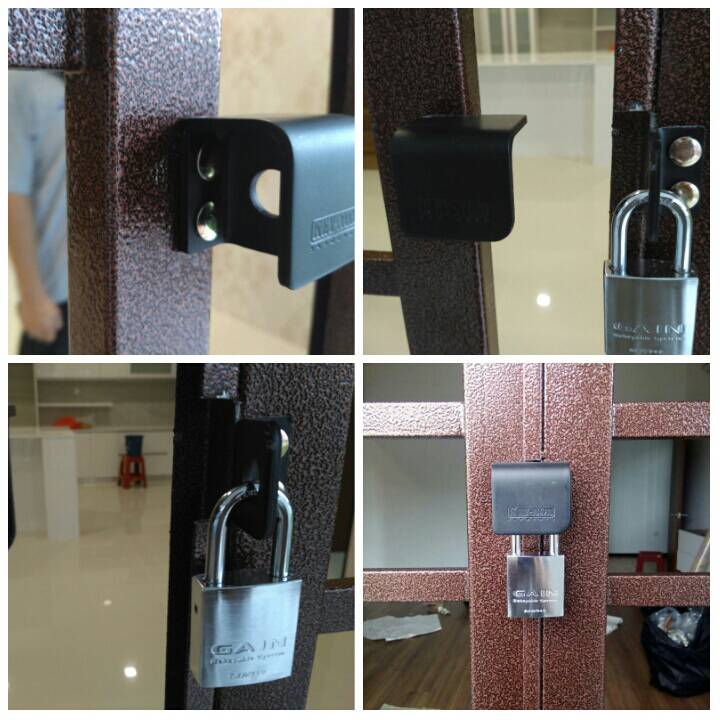
    In the above cases, we use Hardened Steel (Steel and Stainless Steel are saw-able, Hardened is not saw-able) Bracket. The screws are non removable, and there are no welded part. So in order to defeat the bracket, you need to rip the whole metal grille body apart. This is really tough to do.

    Now, what type of bracket are you using?

    Advise from Locksmith,
    www.finelockshop.com
  • Premium Viro Italian Padlock is defective?

    Premium Viro Italian Padlock is defective?

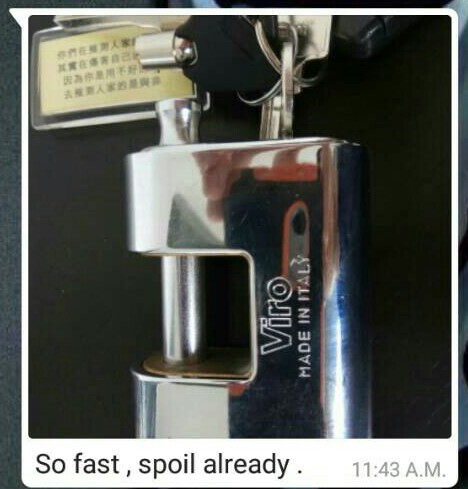
    A walk-in client chooses the VIRO padlock for his grille door. After few days come the above complaint. Just happened today.

    Viro is such a famous padlock among the professional locksmith industries, worldwide. 100% all locksmiths know VIRO, as a extremely high quality padlock, including us. So what is this Viro padlock? (If you don’t know this brand yet, please, educate yourself)

    Our most memorable memory with Viro is when one of our client in Stapok used it for 25 years, then comes the big flood (Kuching 2014’s famous big flood) entering to his house. The padlock is still locking his back grille, soaked in muddy flood water. 2 days later he return to his home. Still can unlock the Viro. Still works like usual except it’s really dirty, full with muds.

    VIRO: 

    1. Fully made in Italy
    2. Anti Pick
    3. Anti Bump
    4. Anti Saw
    5. Anti Bypass
    6. Anti Cut
    7. Extremely Durable

    So what happen with today’s client? Comes complaint that it’s spoil already. Key goes in, can turn, but the shackle won’t detach. We tried, it’s true. Shackle seems stuck.

    Under normal circumstances, we will have grind it, or drill it. But this is a VIRO. How can it be spoilt? A genuine Viro simply cannot be spoilt, especially if you said less than 1 week!

    The only possibility, is the grease hardened. So we tried spray some WD-40 to it. After few spray, the shackle becomes workable. Work like new again. 

    The client, however, do not believe Viro anymore and exchanged with a cheaper Yale. We understand the client’s worries, because he had never heard of this brand (he is the first for us). The padlock is indeed stuck initially when we tried. So we credited his refund.

    Now you might ask, what is hardened grease? 

    Every single padlock, with moving mechanical parts, needs grease. Just like car needs oil. Grease, if stay stationary/ no movement, might gets solidified. So a constantly used (got movement) padlock will not have hardened grease problem.

    But Viro is a slow selling product, due to it’s high price. The Viro that we’re selling in Malaysia, we estimate is manufactured at least 5 years ago. So 5 years in a box without movement. Possibility of hardened grease is there. 

    Same thing happened if you leave your home for long time, like few months. Some locks and padlocks do feels more sticky, or stuck. (We get some business from such cases as well)

    The next time you come back from holiday, get some WD-40. Spray your locks before calling any locksmith.

  • What makes a good padlock?

    What makes a good padlock?

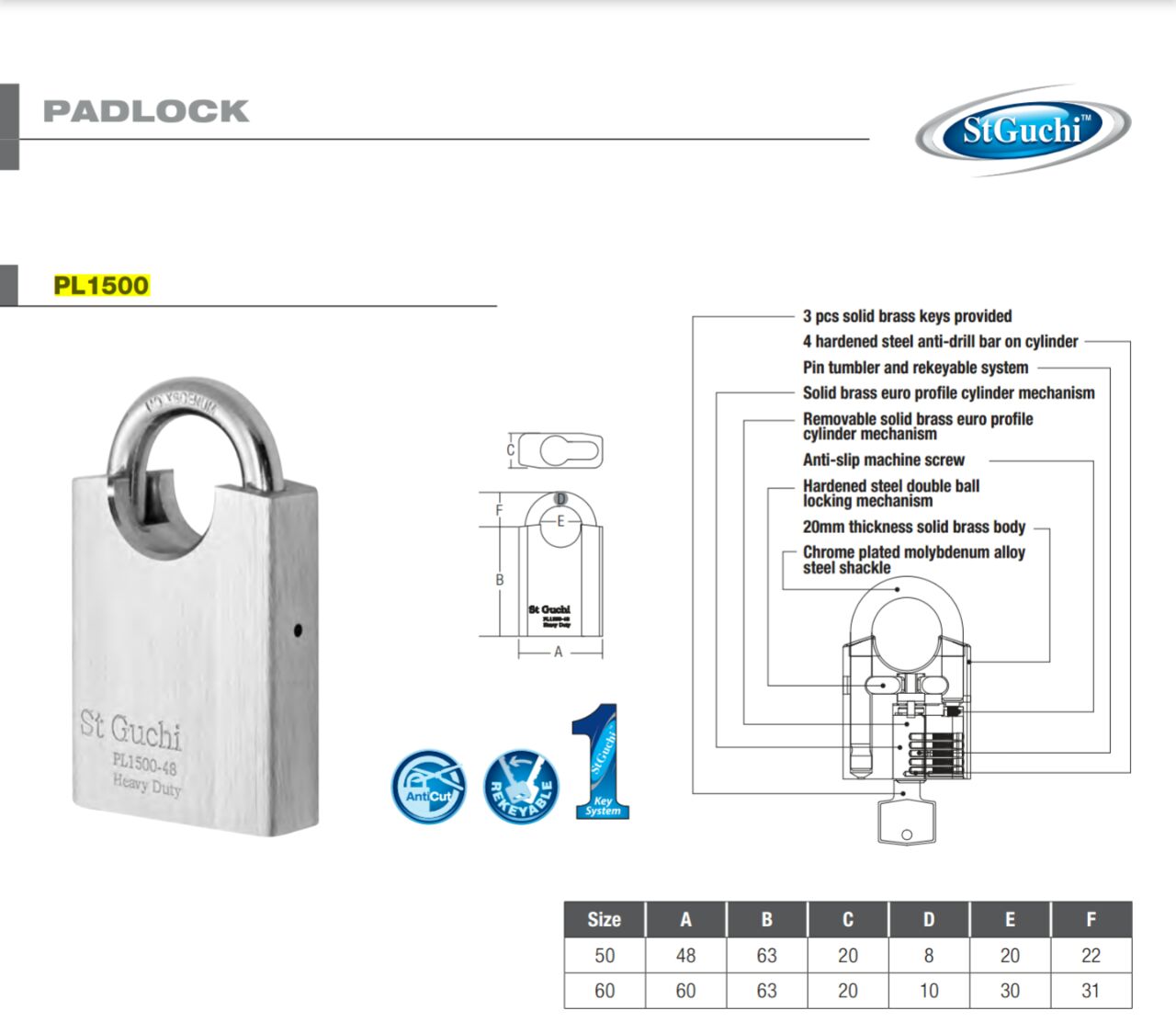
    I come across this catalogue from a fellow locksmith in KL. I have got my hand on many St Guchi product and am not impressed. 

    But this is a Molybdenum padlock…

    Molybdenum is usually a premium padlock and among the best material for shackle. I ll try on a St Guchi Molybdenum padlock soon, but for now lets talk on some padlock’s shackle knowledge. Because everybody love padlock, except me (maybe)

    1. No. 1 most common material for padlock is Fake Hardened Steel. It can be cut, can be saw and it will rust. If you buy 10 different padlock from a hardware store, you will get around 8pcs that are fake hardened steel. 
    2. Secondly is Real Hardened Steel. Can be cut, but cannot be saw. It will rust, but depends on the quality of the chrome coating. How can we know it is a real hardened steel, you ask? Get a hack saw and try saw the shackle. If you manage to saw it, it is fake. But if can’t, it is real. At Fine Lock Shop, we try saw every single padlock that we sell. I will share some photos of our experiments next time.
    3. Stainless steel. The best for outdoor. It just won’t rust. But, it can be saw. Stainless steel is known for long lasting and highly rust resist, unfortunately it is not a really hard steel. Not as hard as real hardened steel. So there are pros and cons here.
    4. Boron and Molybdenum. This 2 are commonly used only at the expansive padlock. Might reach up to RM 500 per padlock if it comes with security key. You can’t saw it, can’t cut it. And all come with layers and layers of coating, makes it really hard to rust. So theoretically, boron and molyb will rust, but they are protected by the coating. Just early this year I have seen some Abloy-330 and 341 boron padlocks right here in Kuching Tabuan Jaya, put at outdoor to rain and sun for around 20years, still work smoothly and only some small dots of rust to the shackle. Very good padlocks.

    So now you know the shackle and its material. Next time you can choose a padlock according to your needs. 

    Another important aspect is the internal material and the key cylinder. No matter how good the shackle is, if the key cylinder is really cheap, the padlock can be compromised in seconds and it defeats the purpose of the padlock. I ll let you know how to choose a good key cylinder in the future.

    With Sincere.
    Francis, Just A Humble Locksmith.
    www.finelockshop.com