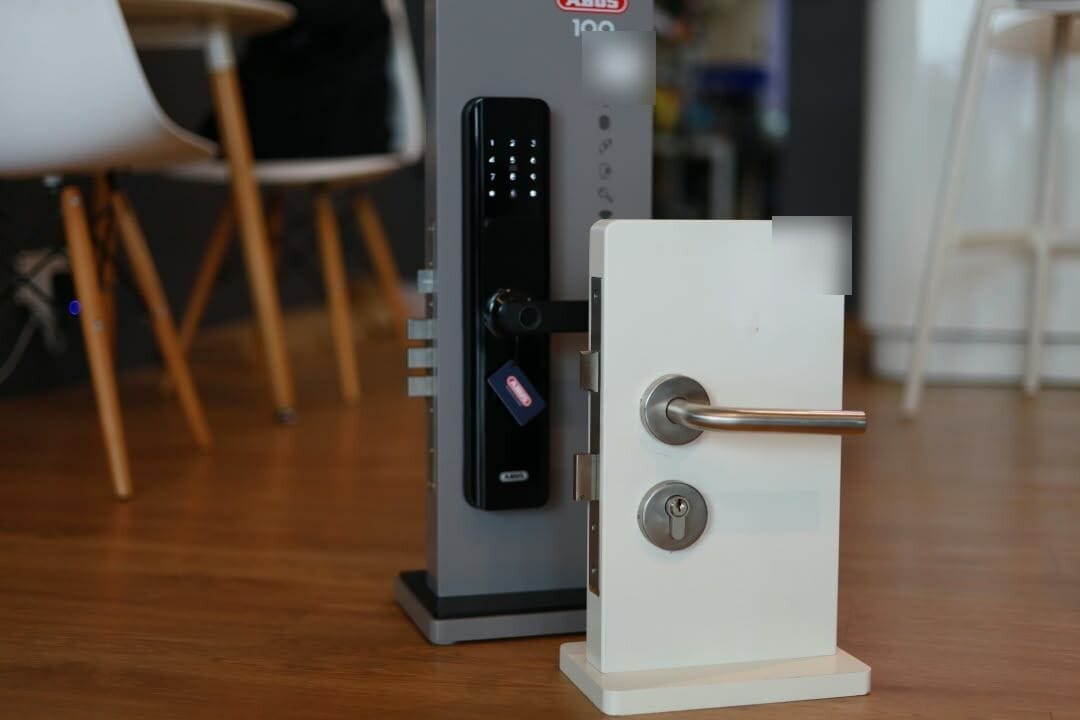
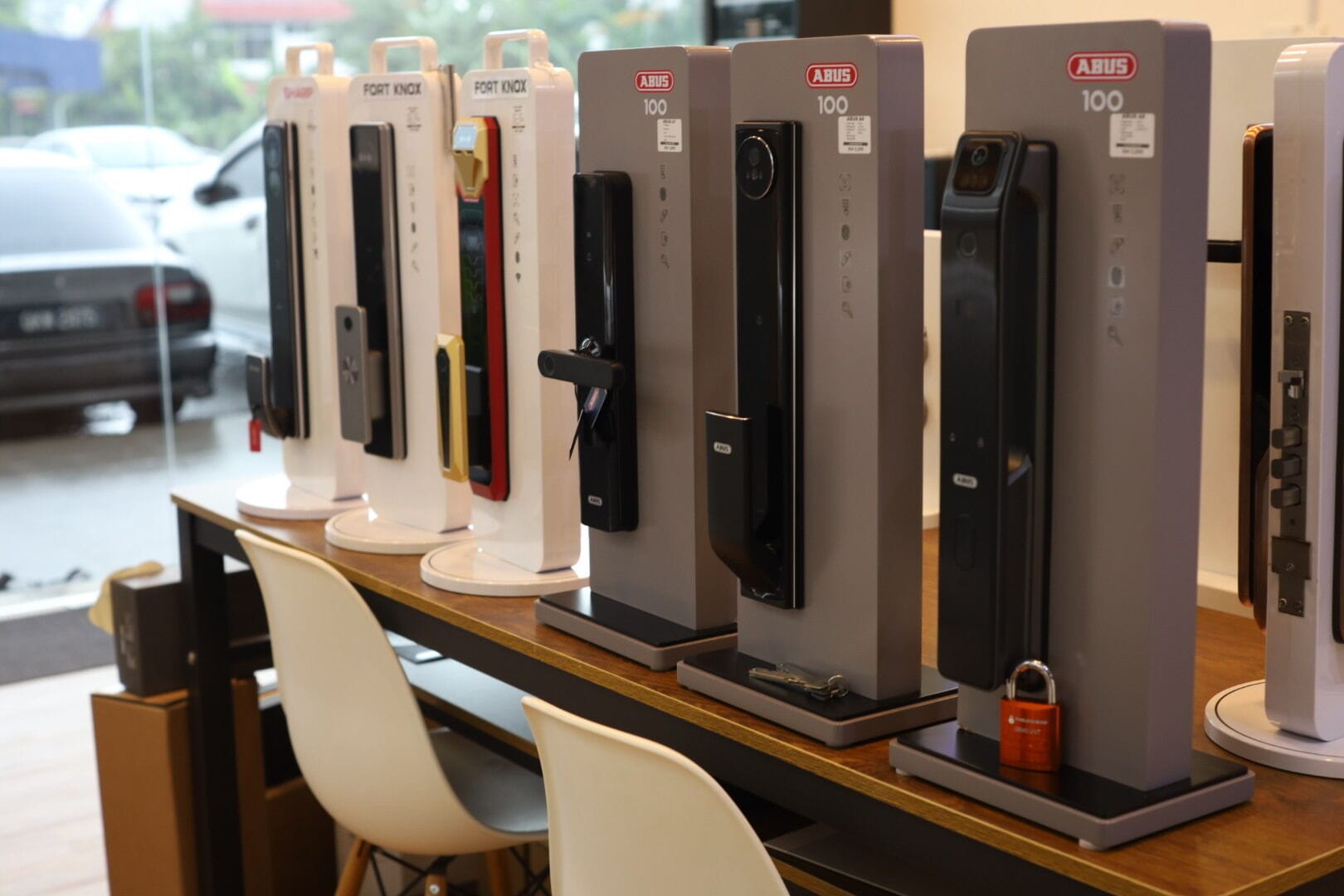
If you already have a digital lock on your front door, or you are about to buy one, this is a fair question. You are paying more than a normal key lock. You want to know how many years you will get before it gives problems.
Here is how we see it at Fine Lock Shop, from the locks we sell, install and repair in Kuching.
How long does a smart lock last?
Short answer: For normal home use, a good branded smart lock usually lasts around 7 to 10 years or more. Some go much longer. Early failure does happen, but it is usually due to specific low quality locks or some defect issue.
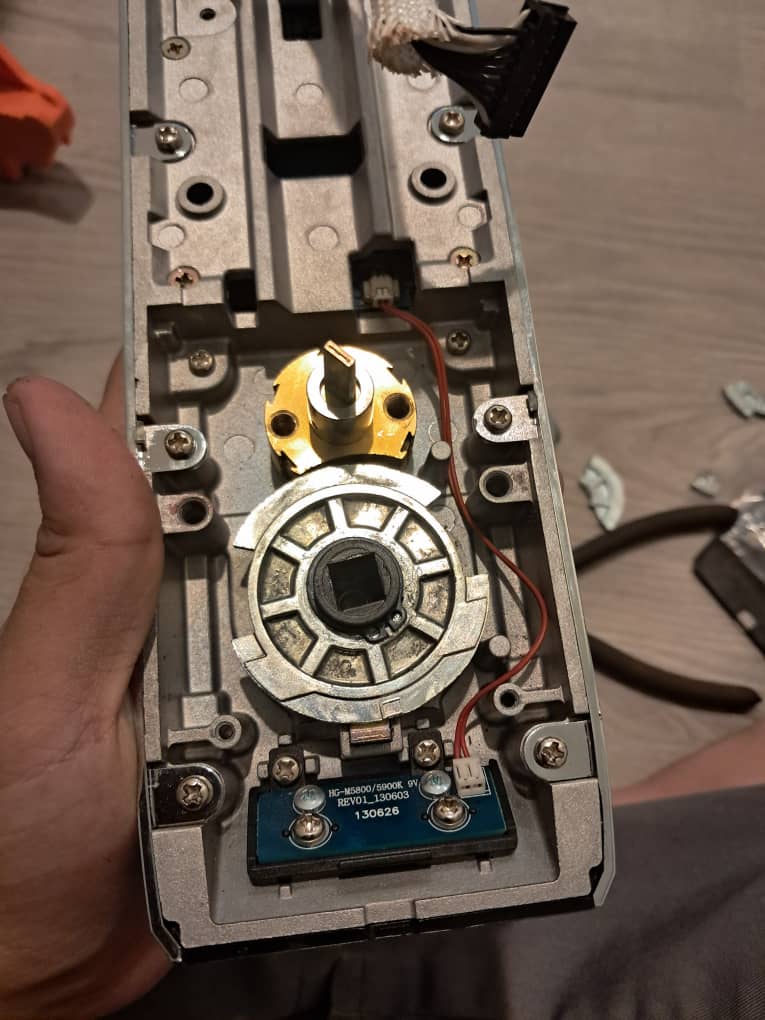
Real case from our shop: We repaired a digital lock that was a bit more than 10 years old. It worked well until the week the owner could not unlock the door. The problem was one small broken spring. We fixed it on site in about 30 minutes, and the lock went back to work. In the same post we shared that we have clients using digital locks for more than 14 years and counting, still no problem. We also said some locks start giving problems as early as 2 years, but that number is very small. (Digital lock needs repairs after 10 years operating)
Fact: There is no honest single “lifespan number” for all smart locks. Even Consumer Reports, which lab-tests smart locks for kick-in, drilling and features, does not publish a lifespan in years. How long a lock lasts depends on usage, the door, the brand and whether spare parts exist. So we give you our shop experience plus what the big lock makers themselves say, not a made-up industry average.
Practical takeaway: Plan for 7–10 years from a branded lock at home. Treat anything after that as a bonus, not a failure.
What “last” really means
Short answer: A smart lock is three things in one: the mechanical body (mortise, bolt, gears, springs), the electronics (keypad, fingerprint reader, motherboard), and the batteries. Each one wears out on its own timeline.
When someone says “my lock spoiled,” it is often only one small part. The 10-year lock above still had a working body and electronics — only a spring broke. We did note that its mortise gear and spring were starting to show wear from metal-to-metal friction. That is normal ageing, not a defect.
Fact with source: The big old lock makers also treat these parts differently. Schlage gives its residential smart locks (Sense, Encode, Connect and others) a limited lifetime warranty on mechanical parts and finish, but only 3 years on electronics (Schlage residential warranty). Yale does the same split: lifetime finish and mechanical for the original owner at a single-family home, and 2 years on electronics (Yale warranty). In plain words: makers expect the metal body to outlast the electronics.
Practical takeaway: Before you decide your lock is “finished,” find out which part has the problem. Often it is one part, not the whole lock.
Battery life vs lock life
Short answer: Batteries are not lock life. In normal home use, most digital locks run about 1 year on one set of batteries, based on around 10 opens a day.
Real case from our shop: A smaller office with about 20 staff used a digital lock on their door. The lock itself was fine. The battery was the problem: with staff and customers going in and out maybe 50–100 times a day, the battery drained in less than a month. That is why we advise offices with more than about 10 people to look at an electromagnetic lock instead. (Office? Don’t use digital lock)
Fact with source: Maker specs say the same thing — battery life depends on the model and how it connects. Schlage lists its Connect BE468 deadbolt at 8,760 hours of battery life (about 1 year) (Schlage BE468 spec), but its Wi-Fi Encode Plus at up to six months on 4 AA batteries (Schlage Encode Plus spec). Consumer Reports also notes Wi-Fi locks can use more battery than low-power options (Consumer Reports).
When the battery does run flat, you are not locked out forever. Most locks give low-battery warnings first, and many have a backup key or external power contact — Schlage, for example, describes low-battery alerts plus a key or jumpstart backup (Schlage smart locks). We explain this in Will a smart lock still work during a blackout?
Practical takeaway: Change batteries once a year at home, or as soon as the low-battery warning starts. Heavy traffic means more frequent changes.
What wears out first
Short answer: In our experience, the moving parts go first — springs, gears inside the mortise, and the handle or keypad that people touch every day.
Real cases from our shop:
– The 10-year lock: a small broken spring, with gears showing wear. Repaired on site. (post)
– A 7-year-old Samsung digital lock we sold earlier came back with a problem. We repaired it instead of telling the customer to buy a new one, and the customer gave us a thumbs up. (post)
Practical takeaway: If your lock is 7 years or older and starts acting up, a worn small part is the most likely cause. Ask about repair first.
Fact with source: Good mechanical parts are built for a lot of use. Under ANSI/BHMA A156.36-2020, Grade 1 deadlocks must pass a test of 250,000 cycles of opening and closing (BHMA). That is a lab durability test, not a promise of a certain number of years — but it shows why a well-made body keeps going long after a battery or keypad gives trouble.
What shortens a smart lock’s lifespan
Short answer: Four things we see most:
Heavy traffic — many opens a day wears parts and drains batteries fast (see the office case above).
Wet or outdoor doors — Schlage’s warranty excludes damage from harsh temperature, humidity or other environmental conditions, such as corrosion (Schlage residential warranty). If rain hits the door directly, ask us about the position and the model first.
Ignoring low-battery warnings — weak batteries make the motor work harder and can leave you stuck at the door.
Practical takeaway: Match the lock to how the door is used. A busy office door or an exposed outdoor door needs a different plan from a family front door.
What makes a smart lock last longer
Short answer: Buy a brand with spare parts, change batteries on time, keep the door aligned, and repair before you replace.
Spare parts decide repairability. As we wrote about Samsung, its “durability” is not that it never has problems — it is that handles, rubber and plastic parts, motherboard, reader and touchscreen are all easy to get, so problems can be fixed. Brandless locks usually have no spare parts. Other well-known brands such as Lenovo also have spare parts, though not as many as Samsung. (Samsung digital lock’s durability; Got people willing to repair smart door lock meh?)
Door alignment matters. If the door sags or the bolt rubs the strike plate, the motor and gears work harder every single time. A proper install from the start helps — see our smart door lock installation guide.
How we handle warranty problems: If a lock under our warranty has a problem, we either repair it on the spot, or lend you a demo unit with the same hole pattern so your door stays secured while we fix yours.
Practical takeaway: Branded lock + yearly battery change + well-aligned door = the best chance of 10 years or more.
When to repair vs replace a digital door lock
Short answer: Repair if the lock is branded and spare parts are available. Replace if it is brandless with no parts, if the body is badly worn, or if the lock no longer suits how the door is used.
A simple rule for homeowners:
– Repair — one part has failed (spring, handle, keypad, reader) and parts exist. This is often fast and costs much less than a new lock, like the 30-minute spring repair above.
– Replace — no spare parts, several parts failing at once, or your needs changed (for example, a home door that is now a busy office door).
Practical takeaway: Do not let anyone push you to buy new without checking first. Ask: “Can this part be replaced?”
FAQ
How long do smart lock batteries last?
About 1 year in normal home use (around 10 opens a day). Busy doors drain much faster — an office we advised drained batteries in less than a month.
Can a 7–10 year old digital lock still be repaired?
Often yes, if it is a branded lock with spare parts. We have repaired both a 7-year-old Samsung and a 10-year-old lock.
Is a digital lock a good idea for an office?
For offices with more than about 10 people, we usually suggest an electromagnetic lock instead, because of battery drain.
Do cheap brandless locks last as long?
They may work for a while, but when a part breaks there are usually no spare parts, so the whole lock has to be replaced.
Not sure if your lock can still be fixed?
WhatsApp us photos of your lock (front, back, and the side of the door) at 082-288422 and we will tell you whether repair or replacement makes more sense.
Showroom: Ground Floor, Lot 4863, Jalan Datuk Amar Kalong Ningkan, 93250 Kuching (3rd Mile).
Hours: Mon–Fri 9:00am–5:30pm, Sat 9:00am–2:00pm.
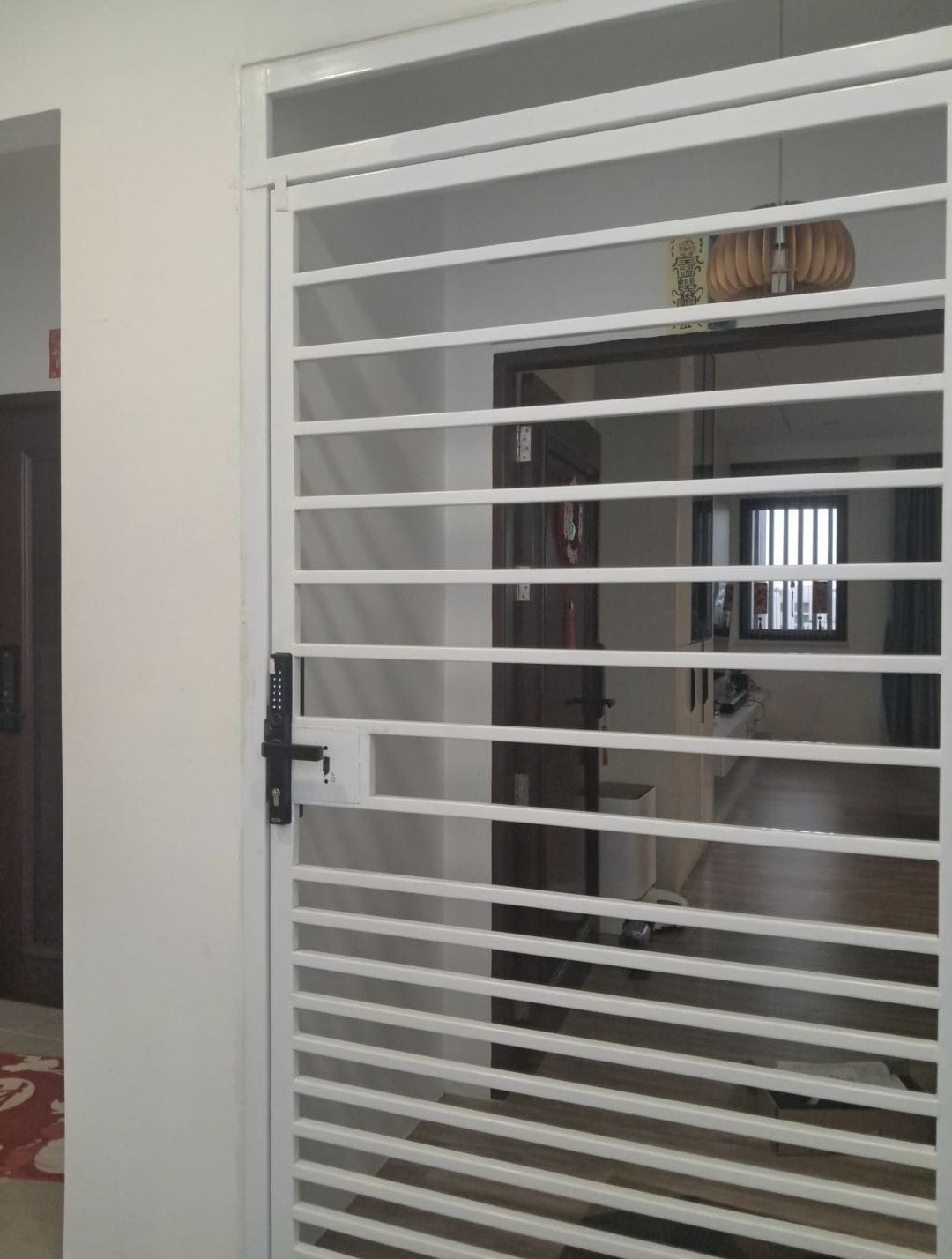
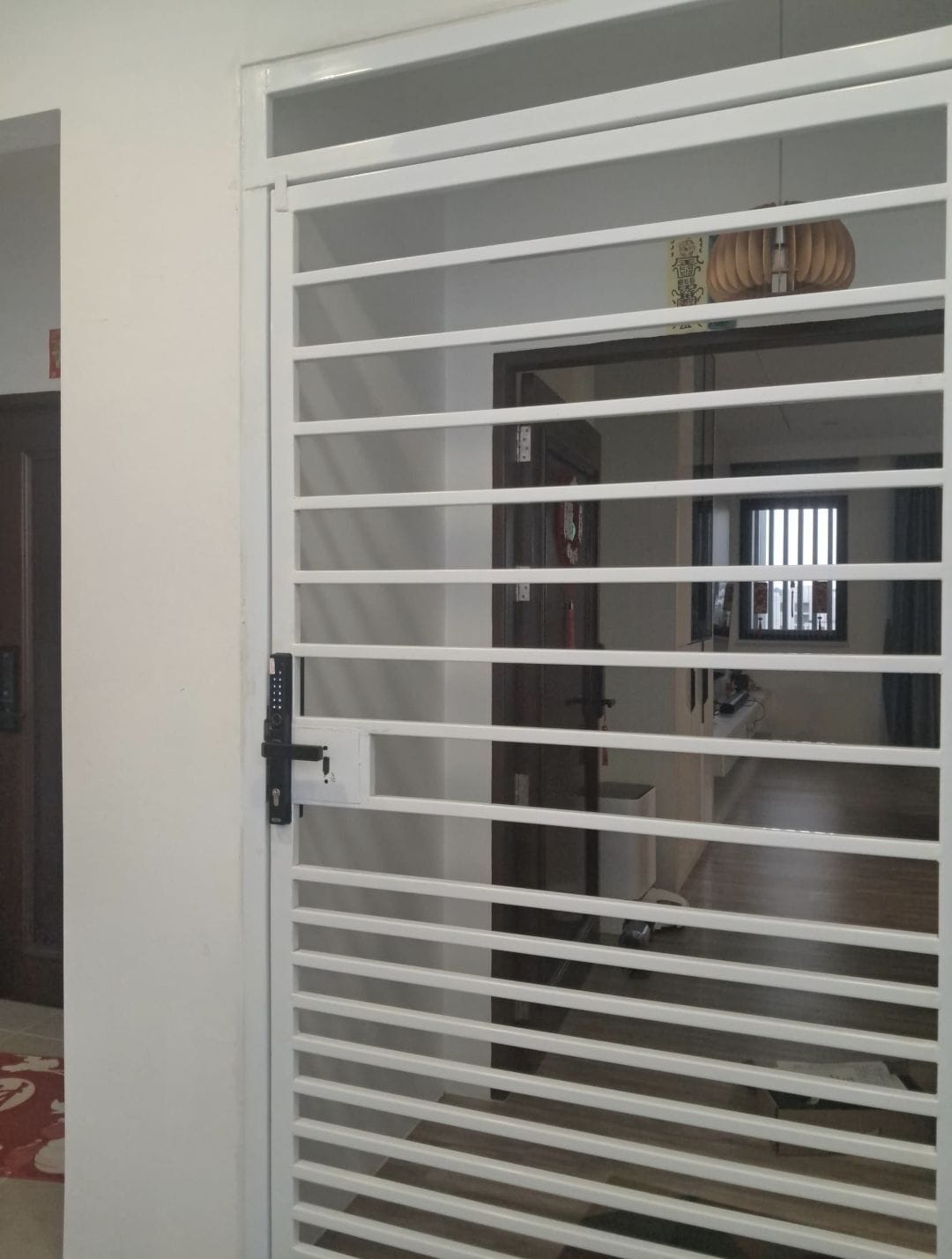
Boleh pasang kunci digital pada pintu grill? Boleh. Tetapi anda perlu smart lock yang dibuat khas untuk pintu grill, bukan smart lock biasa untuk pintu kayu di dalam rumah. Kunci digital itu mesti sesuai dengan bingkai grill anda, tahan hujan dan panas. Dan ia tidak boleh dibuka menggunakan butang atau pemegang di bahagian dalam yang boleh dicapai pencuri melalui celah atau lubang grill.
Dalam artikel ini, kami terangkan pintu grill jenis apa yang boleh dipasang smart lock. Kami lihat masalah yang mungkin berlaku. Kami juga senaraikan apa yang perlu disemak sebelum membeli.
Boleh pasang kunci digital pintu grill?
Boleh. Syarikat yang menjual kunci pintar (smart lock) menawarkan model khas yang direka untuk pintu grill dan pagar. Namun, kunci yang direka untuk pintu kayu di dalam rumah merupakan produk yang berbeza dan tidak semestinya sesuai digunakan pada pintu grill atau pagar.
Berdasarkan pengalaman kami, pintu grill sering menjadi lapisan keselamatan pertama yang perlu ditembusi oleh pencuri sebelum mereka dapat memasuki rumah. Pada Oktober 2012, pencuri memecah masuk rumah seorang balu di Taman Genesis, Batu Kawa. Polis berkata mereka mengangkat pagar automatik dari relnya. Kemudian mereka memotong grill keselamatan di depan dan memaksa buka pintu utama (Borneo Post). Dalam kes itu, grill ialah pintu pertama yang pencuri perlu kalahkan.
Kini syarikat kunci menjual smart lock untuk pintu grill di Malaysia. Kaadas Malaysia berkata kunci pagarnya sesuai untuk pagar flat dan grill rumah teres. Ia berkata pagar terdedah kepada hujan, panas terik dan habuk. Kunci biasa untuk dalam rumah “akan rosak dengan cepat” di situ (Kaadas Malaysia). Novalock berkata NVM 95-G “direka khas untuk pagar grill besi” (Novalock). Häfele juga menjual “Smart Grill Door Lock” (Häfele Home Malaysia).
Kami juga pernah menulis tentang topik ini. Baca artikel lama kami (Bahasa Inggeris): Digital Lock For Grille Door.
Tip praktikal: Jangan pindahkan smart lock lama dari dalam rumah ke grill. Pilih kunci yang jenamanya kata sesuai untuk pintu grill atau pagar.
Pintu grill jenis apa yang boleh pasang smart lock?
Pintu Grill jenis buka-tutup (swing) dan pintu grill sorong (sliding) boleh dipasang smart lock bergantung pada reka bentuk pintu dan kesesuaian model kunci. Pintu Grill swing dibuka seperti pintu biasa dengan menggunakan engsel manakala pintu grill sorong (sliding) dibuka dengan menggelongsorkannya ke tepi di atas landasan. Perkara paling penting ialah memastikan kunci yang dipilih sesuai dengan saiz bingkai dan jenis pintu anda.
Menurut Kaadas, kunci pagar mereka sesuai digunakan pada beberapa jenis pintu grill termasuk pagar flat RUMAWIP, PPR dan PR1MA serta pintu grill berbumbung di rumah teres (Kaadas Malaysia).
Ketebalan bingkai grill juga penting. Maksudnya, berapa tebal bingkai besi pintu grill, dari depan ke belakang. Setiap kunci hanya muat untuk julat tertentu. Berikut ialah julat yang dinyatakan untuk beberapa model:
Aqara U500 gate lock: 22 hingga 28 mm. Aqara turut menyatakan bahawa permukaan pintu dan bingkai perlu rata atau sama paras (Aqara).
Bagaimana dengan smart lock untuk grill sorong (sliding)? Pintu grill sorong (sliding) memerlukan bolt yang lain. Bolt ialah bahagian besi yang keluar untuk mengunci pintu. Häfele berkata Quantum Pro ada bolt cangkuk yang “sesuai untuk pintu swing dan sorong (sliding)” (Häfele Home Malaysia). Bolt cangkuk mempunyai hujung melengkung seperti cangkuk yang mencengkam bahagian bingkai, jadi pintu tidak boleh disorong sehingga terbuka.
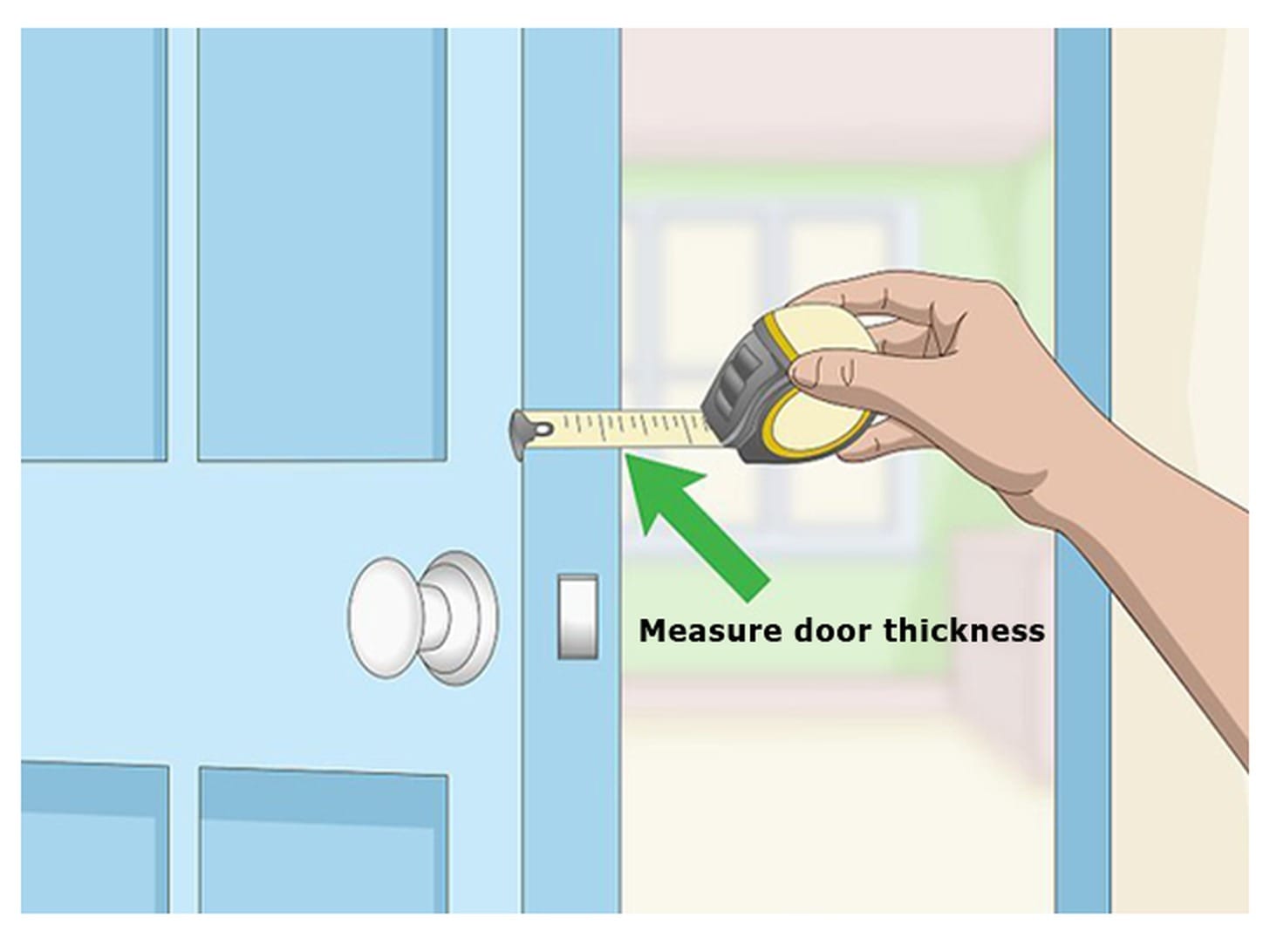
Tip praktikal: Ukur ketebalan bingkai grill dengan pembaris. Lihat sama ada ia swing atau sorong. Ambil gambar kedua-dua belah. Hantar ketiga-tiganya melalui WhatsApp Fine Lock (082-288422).
Apa masalah kunci pada pintu grill?
Ada tiga masalah utama yang perlu diberi perhatian iaitu pendedahan cuaca, risiko kunci dibuka oleh pencuri melalui celah grill, dan kekuatan fizikal grill agar tidak mudah dipotong oleh pencuri.
1. Hujan dan panas. Kuching menerima jumlah hujan yang tinggi sepanjang tahun. Berdasarkan data iklim WMO bagi tempoh 1991 hingga 2020, purata hujan tahunan di Kuching adalah kira-kira 4,233 mm dengan hujan direkodkan sekitar 210 hari setahun yang menyebabkan cuaca menjadi lembab (Data iklim WMO untuk Kuching). Kunci grill dan pagar mungkin terdedah kepada hujan dan panas secara berterusan.
Selain itu, penting untuk menyemak IP rating sebelum membeli smart lock. “IP” menunjukkan sejauh mana kunci tahan habuk dan air. Ia ada dua nombor iaitu nombor pertama untuk habuk. Nombor kedua untuk air. Angka 5 untuk habuk bermaksud sedikit habuk boleh masuk, tetapi tidak cukup untuk timbulkan masalah. Angka 6 bermaksud tiada habuk masuk. Angka 5 untuk air bermaksud ia lulus ujian semburan hos air (Eurotech). Panduan itu juga mengingatkan IP rating tidak menguji kerosakan akibat cahaya matahari dalam jangka panjang (Eurotech).
Contohnya, Novalock kata NVM 95-G ialah IP55 (Novalock). Aqara kata panel luar U500 ialah IP65, dan panel dalam ialah IP54 (Aqara).
2. Seluk tangan melalui celah grill. Kunci biasa dalam rumah boleh dibuka dengan butang atau pemegang di sebelah dalam. Pada grill, pencuri boleh memasukkan tangan melalui celah dan menekan butang itu. Aqara mengatakan kunci pagarnya memerlukan cap jari atau kunci di kedua-dua belah. Ia juga berkata ini dapat menghapuskan “risiko orang menyeluk tangan melalui pagar” (Aqara). Kaadas pula menggunakan alat kawalan jauh (remote). Ia berkata anda boleh membuka pagar dari dalam rumah atau dari dalam kereta (Kaadas Malaysia). Kami juga menerangkan perkara ini dalam Digital Lock and Grille (Bahasa Inggeris).
3. Grill dipotong. Pencuri tidak semestinya menyerang kunci. Pada Jun 2012, seorang lelaki berusia 70 tahun di Batu Kawah kehilangan koleksi duit syilingnya apabila pencuri memotong kunci dan grill keselamatan, kemudian pintu dipaksa buka dari tepi (Borneo Post). Pada Januari 2025, sebuah rumah di Johor Baru dipecah masuk dan polis mendapati pintu grill rosak dan pintu depan dipaksa buka (Malay Mail). Smart lock tidak boleh membaiki grill yang lemah. Baca lagi dalam Padlock & Grille: Common Break-in Method (Bahasa Inggeris).
Tip praktikal: Tanya tiga soalan. Apa IP rating dia? Macam mana nak buka dari dalam? Adakah grill saya sendiri cukup kuat?
Apa yang perlu disemak sebelum beli?
Tanya satu soalan mudah: “Adakah kunci ini dibuat untuk pintu grill macam saya punya?”
Kemudian semak enam perkara ini:
Dibuat untuk grill atau pagar. Jenama mesti dinyatakan dengan jelas.
Muat dengan bingkai anda. Bandingkan julat ketebalan dengan ukuran pembaris anda. Semak sama ada ia untuk pintu swing, pintu sorong (sliding), atau kedua-duanya.
IP rating untuk bahagian luar. Minta nombornya secara bertulis.
Cara membuka dari dalam yang selamat. Dari dalam, ia semestinya memerlukan cap jari, kunci atau remote. Bukan sekadar butang yang sesiapa sahaja boleh tekan.
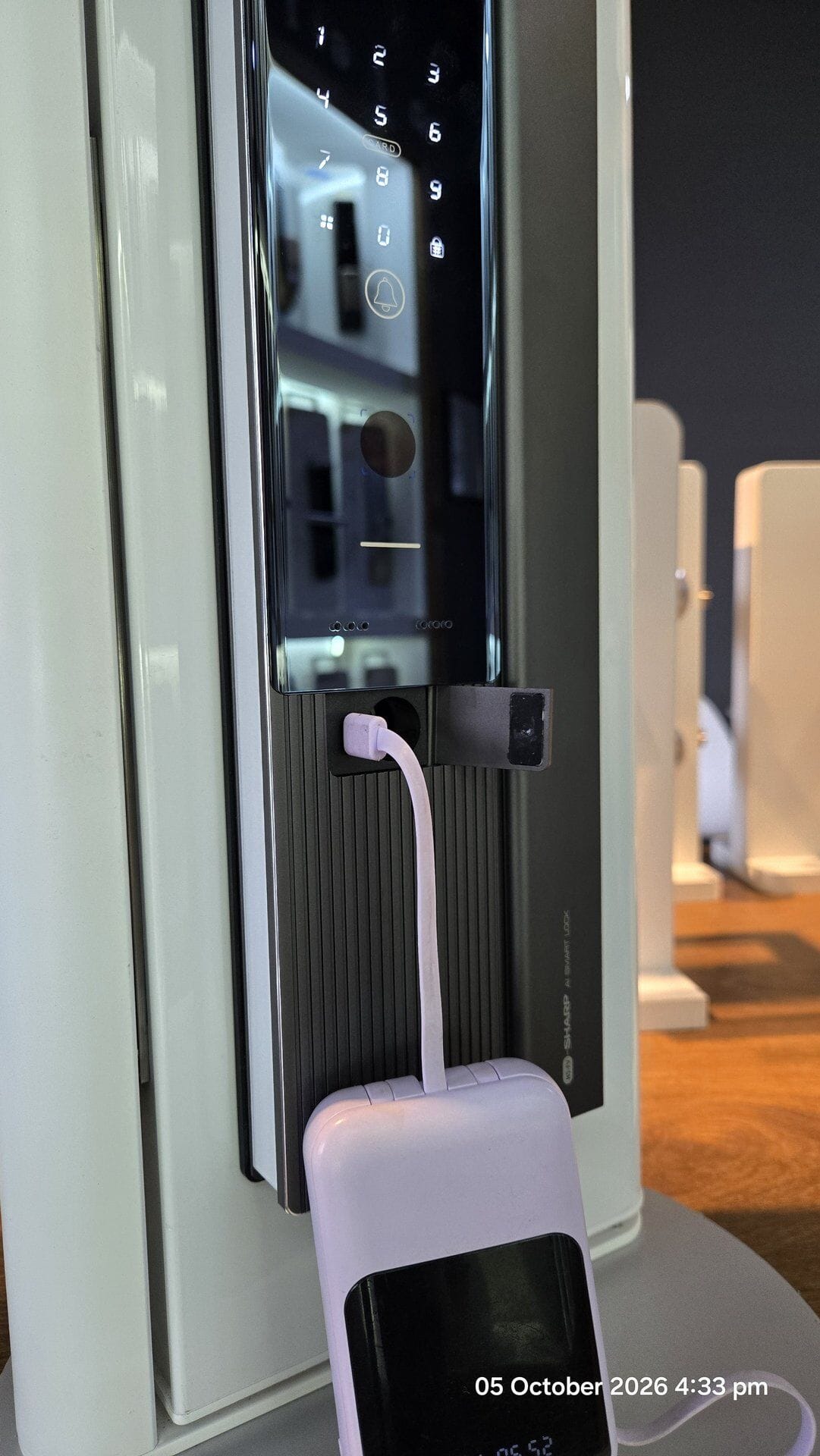
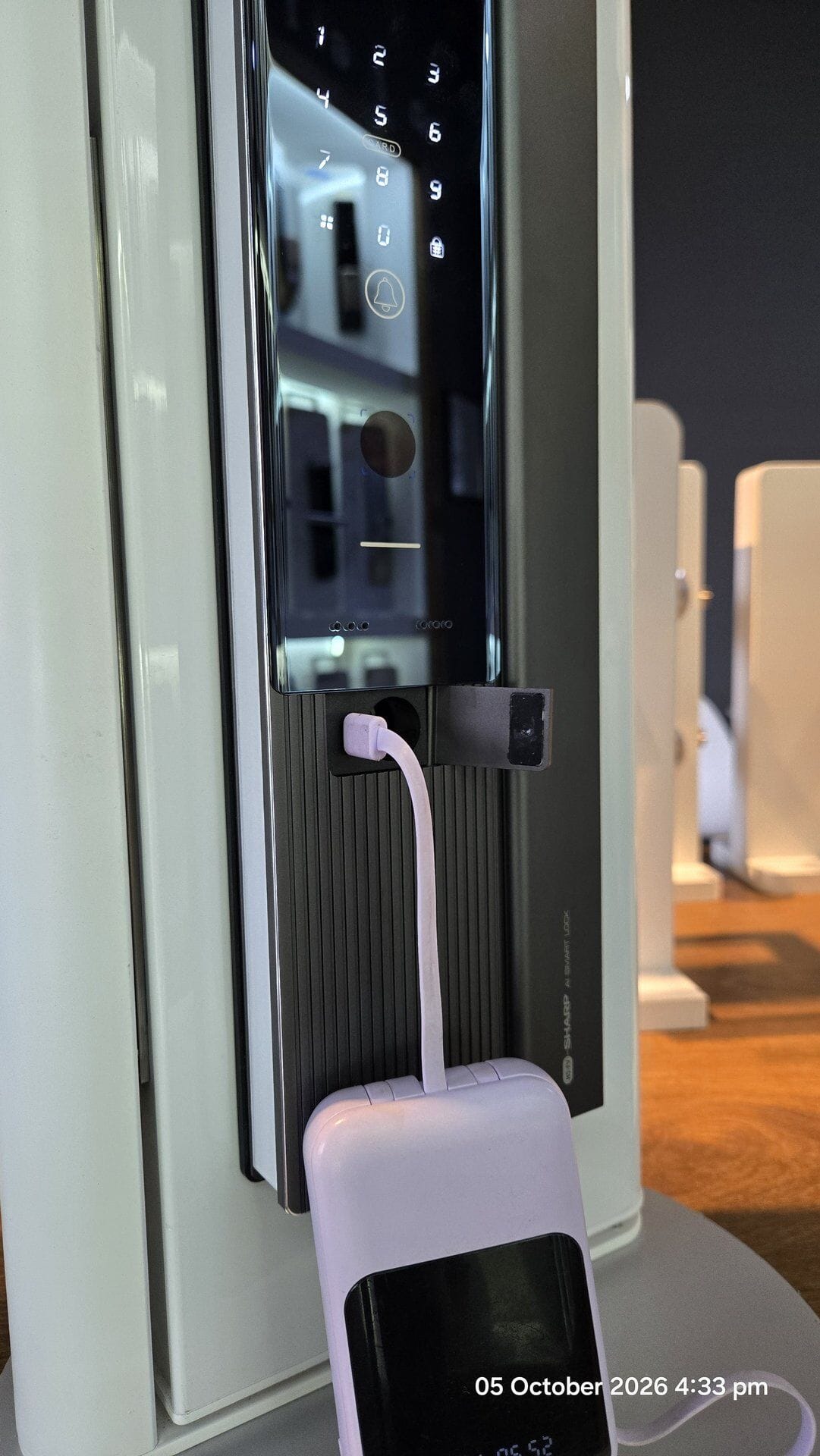
Kunci simpanan dan kuasa kecemasan. Aqara dan Häfele kedua-duanya mempunyai port kuasa kecemasan USB Type-C (Aqara; Häfele Home Malaysia). Tanya juga tentang jenis bateri dan cara menggantikannya serta langkah yang perlu diambil jika bekalan elektrik terputus.
Boleh buka tanpa app. PIN, cap jari atau kad sepatutnya boleh membuka pintu grill walaupun Wi-Fi tutup. Baca Do smart locks work without Wi-Fi? (Bahasa Inggeris).
Tip praktikal: Kalau penjual tidak dapat menjawab enam perkara ini dengan jelas, cari kunci lain.
Tip terakhir
Sebelum membeli, tutup pintu grill dan cuba periksa dari bahagian luar. Bolehkah tangan anda mencapai pemegang atau butang pembuka di bahagian dalam melalui celah grill? Jika boleh, pilih smart lock yang mempunyai mekanisme pembukaan dari dalam yang tidak mudah dicapai dari luar. Lebih baik mengenal pasti risiko ini lebih awal daripada menyedarinya selepas kejadian pecah masuk rumah.
Tip praktikal: Mencari smart lock untuk pintu grill di Kuching? Hantar ukuran dan gambar pintu grill anda melalui WhatsApp Fine Lock Shop (082-288422). Baca artikel asal dalam Bahasa Inggeris: Can You Put a Smart Lock on a Grill Door?. Versi Cina: 铁门可以装智能锁吗?.
Hubungi kami
– WhatsApp: 082-288422
– E-mel: finelockshop@gmail.com
– Alamat bilik pameran: Ground Floor, Lot 4863, Jalan Datuk Amar Kalong Ningkan, 93250 Kuching
– Waktu operasi: Isnin–Jumaat 9:00 pagi–5:30 petang; Sabtu 9:00 pagi–2:00 petang; Ahad dan cuti umum: kecemasan sahaja
Soalan lazim (FAQ)
Boleh ke pasang kunci digital pada pintu grill? Boleh. Pilih kunci yang jenamanya sesuai untuk pintu grill atau pagar. Memastikan ia sesuai dengan ketebalan bingkai dan jenis pintu anda.
Smart lock pintu grill kalis air ke? Semak IP rating dia. Nombor kedua untuk air. Angka 5 atau 6 bermaksud ia lulus ujian semburan air.
Pencuri boleh seluk tangan melalui grill untuk buka kunci ke? Boleh, kalau kunci dibuka dengan butang atau pemegang biasa di sebelah dalam. Pilih kunci yang perlukan cap jari, kunci atau remote dari dalam.
Ada smart lock untuk grill sorong (sliding)? Ada. Contohnya, Häfele mengatakan bahawa kunci grill mereka ada bolt cangkuk untuk pintu swing dan sorong (sliding).
Kalau dah pasang smart lock, pencuri tak boleh potong grill ke? Ya, masih boleh. Smart lock membantu mengunci pintu tetapi tidak dapat menghalang pencuri daripada memotong atau merosakkan grill atau pagar. Terdapat kes pecah masuk yang dilaporkan di Batu Kawah dan Johor Bahru yang melibatkan kerosakan pada pagar kerana dipotong oleh pencuri. Selain memilih smart lock yang sesuai, pastikan grill dan bingkai pintu anda juga kukuh dan tahan.
Short answer: For smart door lock installation, most solid wood, fire-rated wooden doors and security doors can take the right smart lock model. Frameless glass doors, grill doors and doors that are too thin or damaged need a different lock, a kit or a repair first. Check four things before you buy: thickness, solid material, a strike plate that lines up, and a door that closes smoothly.
Smart door lock installation: what your door needs
Short answer: A smart lock needs a door of the right thickness, made of solid material, that closes without force.
Proof from the lock makers: Yale’s door check guide has a result that says “Your door is not a match for a Yale smart lock” when the measurements are wrong (Yale door measurement guide). Schlage says that if the thickness or hole position doesn’t match, “you may require the assistance of a carpenter or need to purchase a replacement door” (Schlage door prep checklist).
The four checks:
Thickness. Every lock lists a range. The Yale Assure Lock 2 fits doors about 35–57 mm thick (Yale spec). The Schlage Encode fits 35–44 mm, or up to about 64 mm with a thick-door kit (Schlage Encode door prep). Digital locks sold in Malaysia list their own ranges, so check yours. For solid wood doors, most locksmiths want 35 mm or more. A skilled installer can manage 33 mm. Thinner doors are not recommended.
Solid material. Screws and the lock body need something firm to bite into. So your door, especially where the lock goes, must be solid.
Strike plate alignment. Schlage’s test: can you lock the door without lifting, pulling or pushing it? If not, fix the door first.
Takeaway: Measure the door thickness and test how the door closes. Do this before you buy the lock.
Wood and metal doors: the easiest fit
Short answer: Solid timber and security steel doors fit the widest range of smart locks.
Most Kuching terrace and semi-D front doors are solid timber or steel. They are usually thick and strong enough. Old lock holes can sometimes be reused. Schlage notes that small holes can be made bigger, but holes that are already too big mean the lock “will not fit properly.”
Two problems to look for:
Hollow-core doors. These are light, thin doors, often used for bedrooms. They are a poor base for a front door lock.
Swollen timber. Humid weather can make wood doors swollen or twisted. A twisted door makes the motor work harder and uses up batteries faster.
Takeaway: If your wood or metal door is solid and closes smoothly, it is ready.
Glass and frameless doors
Short answer: Frameless glass doors can’t take a normal smart lock. Glass doors with an aluminium frame often can, if you use a slim lock.
Tempered safety glass can’t be drilled after it is made, so frameless doors need a lock made for glass. Common options are a clamp-on glass door lock or a magnetic lock fitted to the frame.
Aluminium-framed glass doors are common in Kuching shophouses. The frame is narrow, so a standard lock body is often too wide. A narrow-frame (slim) smart lock is made for this.
Takeaway: Send your locksmith a photo of the door edge and frame before choosing a lock.
Grill doors and double doors
Short answer: Both can have a smart lock, but they usually need a different lock type.
A grill door has gaps, so someone outside can reach in to the inside handle. Grill doors need a lock built for that. Our full guide: Can You Put a Smart Lock on a Grill Door?
On double doors, the smart lock goes on the door you use (the active leaf). The second door needs firm bolts at the top and bottom. If those bolts are loose, both doors can be pushed open together.
Takeaway: On grill and double doors, choose the lock type first, then the brand.
When the door must change first
Short answer: Fix weak frames, loose hinges and bad strike plates before you fit a smart lock.
A lock holds only as well as the door and frame around it. In Smart Lock vs Traditional Lock, we showed that the frame and strike plate matter as much as the lock.
Fix these first:
Sagging door: tighten or replace the hinges so the bolt lines up.
Cracked or rotten frame: repair it so the strike plate holds.
Door too thin or too thick: use a kit if the lock maker offers one. Otherwise, replace the door.
Takeaway: A small door repair costs less than a new smart lock that jams.
What installation involves and what it costs
Short answer: A proper install includes checking the door, drilling, fitting, testing and setup. If you buy the lock from us, installation is RM199 for a mortise lock or RM150 for a latch lock. If you bought the lock elsewhere, installation is RM300.
The usual steps:
Check the door type, thickness, frame and how it closes.
Drill new holes or adjust the old ones.
Fit the lock body, the strike plate and both sides of the lock.
Test the bolt, the backup key and the auto-lock several times.
Set up fingerprints, PINs and the app, and show you how to use them.
Those are our real digital door lock installation cost figures: RM199 (mortise) or RM150 (latch) with a lock bought from us, and RM300 if the lock was bought elsewhere. If the door needs repair first, we tell you before any work starts.
Takeaway: Before booking, ask what the install fee includes.
FAQ
Can a smart lock be installed on any door? No. It needs the right thickness, solid material and a strike plate that lines up. Most wood and metal doors work. Frameless glass and grill doors need special lock types.
Can I put a smart lock on my existing door? Usually, yes. Old holes can often be reused or made bigger. If they are already too big, or the door is the wrong thickness, you need a kit, a repair or a new door.
How much is digital door lock installation in Kuching? At our shop, installation is RM199 for a mortise lock or RM150 for a latch lock bought from us. If you bought the lock elsewhere, installation is RM300. Any door repair is quoted before work starts.
Can you put a smart lock on a glass door? Not a normal lock on frameless tempered glass. Use a glass-door or magnetic lock. Aluminium-framed glass doors often take a slim smart lock.
Do I need a new door for a smart lock? Only if your door is hollow, damaged, or outside the lock’s thickness range.
Next step: measure, photograph, then choose
Measure your door thickness. Then take one photo of the door edge and one of the frame. WhatsApp them to Fine Lock Shop Kuching at 082-288422. We’ll tell you whether your door is ready and, if not, what to fix. Our showroom is at Ground Floor, Lot 4863, Jalan Datuk Amar Kalong Ningkan, 93250 Kuching (3rd Mile).
Smart lock vs traditional lock: which is actually stronger? Neither, by itself.
A door lock is only as strong as its weakest part. Strength comes from the bolt, the strike plate, the screws, the door and the frame. It also comes from good fitting. These matter more than whether you open it with a key or a fingerprint.
In this post, we explain how each kind of lock gets beaten. Then we show you how to check a lock’s strength before you buy.
Smart lock vs traditional lock: which is actually stronger?
Short answer: In tests, they come out about the same. A smart lock is not stronger just because it is smart.
Consumer Reports, a US group that tests products, tests both types of locks in the same way. Their testers swing a 100-pound steel ram at a door with the lock fitted. They also drill and pick the locks. A few good kicks beat almost every lock they rated. So did a couple of minutes with a cordless drill. That goes for normal deadbolts, keypad locks and smart locks (Consumer Reports).
They say smart locks are “just as susceptible to forced entry” as normal locks. Smart locks may also be open to digital hacks (Consumer Reports).
Practical takeaway: Don’t buy a smart lock because you think it is tougher. Judge any lock by its parts and its fitting.
What makes a door lock strong or weak?
Short answer: The parts around the lock matter as much as the lock. A strong lock on a weak frame is still weak.
The weak spot is often the strike plate. This is the metal plate on the door frame that the bolt goes into. Consumer Reports kick-tested almost two dozen locks. Only six held up with the parts they came with. Then testers fitted a box strike. This is a stronger metal box for the bolt, held with four 2-inch screws. After that, every lock was very hard to kick in (Consumer Reports).
Consumer Reports found many strike plates come with short screws. These hold only the thin door frame, not the wall behind it. They also warn that weak doors, like hollow doors, may break before the lock does. They advise 3-inch screws for the strike plate and the hinges (Consumer Reports).
Practical takeaway: Open your door and look at the frame. If the screws are short, or the plate is thin, fix that first. It may help more than a new lock.
How traditional locks get beaten
Short answer: By force, or by attacking the key part. The key part is called the cylinder. It is the small barrel you put the key into.
There are a few common tricks. Picking means moving the pins inside with small tools. Bumping means hitting a specially cut key to jump the pins. Snapping means breaking a cylinder that sticks out from the door, so the lock can be opened. A West Yorkshire Police leaflet looked at attacks on these cylinders. It says they made up about 20–25% of all burglaries in its area. In 40% of these, the burglar did not get in (West Yorkshire Police leaflet).
London’s Metropolitan Police advise a cylinder rated TS 007 3-star. They say these locks protect against snapping, drilling and bumping (Met Police). Police also say a cylinder should not stick out past the door or handle (West Yorkshire Police).
Practical takeaway: Look at your key cylinder from outside. If it sticks out past the handle, ask a locksmith about a shorter, tested one.
How smart locks get beaten
Short answer: In the same ways as normal locks, plus a few new ones. A smart lock has a body, a bolt and often a backup key. It also has electronics.
Forced entry still works. Consumer Reports found many smart locks are still open to drilling and picking (Consumer Reports). Many smart locks also have a key override. This is a hidden keyhole for when the battery is flat. That keyhole is a cylinder too. So it can face the same picking and bumping tricks.
Then there is the electronic side. In 2025, university researchers tested 18 Bluetooth smart locks. They found 14 were still open to attack. Some attacks let a stranger in. Others stop the lock working, or hide from the entry log (Lin et al., IEEE Transactions on Consumer Electronics).
Practical takeaway: Check the backup keyhole, not only the keypad. Keep the lock’s software updated, and use a long, unique app password.
How to check a lock’s strength before you buy
Short answer: Look for an independent test rating. Don’t rely on words like “heavy duty” on the box. Terms like C-class cylinder, Anti-pick, Anti-kick, Anti-burglar etc are all self-made-claim. How do they know if it was never tested?
In the US, the group BHMA grades many locks from Grade 1 to Grade 3. Grade 1 is the highest (BHMA). Products are tested by independent labs to earn the BHMA Certified mark (BHMA). Consumer Reports says these grades seem to match its own test results. But the box doesn’t always show the grade (Consumer Reports).
In the UK, look for TS 007 stars or Sold Secure Diamond (SS312) on cylinders. West Yorkshire Police recommend both (West Yorkshire Police). For smart locks, Sold Secure, a UK testing house, made a standard called SS504. It tests the lock against physical attack. It tests the cylinder to EN 1303, a European cylinder standard, if there is one. It also checks the electronics and the online security (Secured by Design).
Practical takeaway: Ask the shop which test the lock has passed. If no one can tell you, treat it as untested. Treat any claim without a test result as unproven.
When is each one the stronger choice?
Short answer: Pick the lock with better tested parts and better fitting. The type comes second.
A traditional lock wins when it has a tested cylinder and a solid box strike. It has no battery, app or software to fail. A smart lock wins when it has a tested body, strong bolts and a tested backup cylinder. It also has a plus that keys don’t. You can delete a code when someone moves out, without changing the lock (Consumer Reports).
Practical takeaway: Choose smart or key by how you live. Then make it strong with tested parts and a proper fitting.
FAQ
Is a smart lock stronger than a normal lock?\
Not by itself. Consumer Reports found both kinds can be kicked in or drilled. The bolt, strike plate, screws and door decide the strength.
Can a smart lock be broken easily?\
A poorly made or poorly fitted one can. In one 2025 study, 14 of 18 Bluetooth smart locks were still open to attack. Choose a tested model and have it fitted well.
What is the strongest door lock?\
There is no single strongest lock. Not even a bank vault lock can stop every attack forever. Look for a high independent rating, such as BHMA Grade 1, TS 007 3-star or Sold Secure. Fit it with a box strike and long screws.
Can burglars pick a smart lock?\
They can pick its backup keyhole if it has one. Many smart locks have a normal key cylinder for flat batteries. Ask how well that cylinder is tested.
Does a stronger strike plate really help?\
Yes. Consumer Reports fitted a box strike with longer screws. After that, every lock was very hard to kick in.
Closing tip
Try this simple check at home. Open your front door and look at the frame where the bolt goes in. Is the plate thin? Are the screws short? Then look at the key cylinder from outside. Does it stick out? These three things tell you more about your door’s strength than the lock’s brand.
Practical takeaway: Not sure how strong your door is? Bring a photo of your door, frame and lock to Fine Lock Shop Kuching (3rd Mile). We are at Ground Flr, Lot 4863, Jalan Datuk Amar Kalong Ningkan, 93250 Kuching. We are open Mon–Fri 9:00am–5:30pm and Sat 9:00am–2:00pm. Sundays and public holidays are for emergencies only. You can WhatsApp us at 082-288422 or email finelockshop@gmail.com.
Yes, you can. But you need a digital lock for grill door use in Malaysia, not a normal indoor lock. It must fit your grill frame and handle rain and sun. It also must not open from an inside button that a thief can reach through the bars.
In this post, we explain which grill doors can take a smart lock. We look at the problems you may face. And we list what to check before you buy.
Can you put a smart lock on a grill door?
Yes. Lock makers sell smart locks made just for grill doors and gates. But a lock made for a wooden door inside the house is a different thing.
In our experience, the grille door is usually the first door a thief needs to get through. In October 2012, robbers broke into a widow’s house at Taman Genesis, Batu Kawa. Police said they lifted the auto gate off its rail. Then they cut through the front security grille and forced open the main door (Borneo Post). In that case, the grill was the first door the robbers had to beat.
Lock makers now sell a smart lock for grill door use in Malaysia. Kaadas Malaysia says its gate locks fit flat gates and landed house grilles. It says gates face rain, strong sun and dust. A standard indoor lock “will fail quickly” there (Kaadas Malaysia). Novalock says its NVM 95-G is “designed specifically for metal grille gates” (Novalock). Häfele sells a “Smart Grill Door Lock” too (Häfele Home Malaysia).
Practical takeaway: Do not move your old indoor smart lock to the grill. Choose a lock that the maker says is for grill doors or gates.
What kinds of grill doors can take a smart lock?
Both swing grills and sliding grills can take one. A swing grill opens like a normal door, on hinges. A sliding grill moves sideways on a track. The key is that the lock must fit your frame size and door type.
Kaadas lists the grills its gate locks fit. These include RUMAWIP, PPR and PR1MA flat gates. They also include sheltered grilles at landed houses (Kaadas Malaysia).
Frame thickness matters. This is how thick the metal frame of the grill door is, from front to back. Each lock fits only a certain range. Here is what some makers say:
Aqara U500 gate lock: 22 to 28 mm. Aqara also says the door and frame must sit flush, which means level with each other (Aqara).
What about a smart lock for sliding grill doors? A sliding door needs a different bolt. The bolt is the metal part that comes out to lock the door. Häfele says its Quantum Pro has a hook bolt “suitable for swing and sliding doors” (Häfele Home Malaysia). A hook bolt is shaped like a hook. It grabs the frame, so the door cannot slide open.
Practical takeaway: Measure your grill frame thickness with a ruler. Note if it swings or slides. Take a photo of both sides. Bring all three to the shop.
What problems can happen with a lock on a grill door?
There are three main problems. Weather, a thief reaching through the bars, and a thief cutting the grill.
1. Rain and sun. Kuching is very wet. From 1991 to 2020, Kuching got about 4,233 mm of rain a year. It rained on about 210 days each year (WMO climate normals for Kuching). A grill lock sits outside in all of this.
So look for an IP rating. “IP” means how well the lock box keeps out dust and water. It has two numbers. The first number is for dust. The second number is for water. A 5 for dust means some dust may get in, but not enough to cause problems. A 6 means no dust gets in. A 5 for water means it passed a test with a water hose spray (Eurotech). The guide also warns that IP ratings do not test for sun damage over time (Eurotech).
For example, Novalock says its NVM 95-G is IP55 (Novalock). Aqara says the outer panel of its U500 is IP65, and the inner panel is IP54 (Aqara).
2. Reaching through the bars. An ordinary indoor lock can open with a button or handle on the inside. On a grill, a thief can put a hand through the gaps and press it. Aqara says its gate lock needs a fingerprint or key on both sides. It says this removes “the risk of somebody reaching through the gate” (Aqara). Kaadas uses a remote control instead. It says you can unlock the gate from inside your home or your car (Kaadas Malaysia). We also explain this in Digital Lock and Grille.
3. Cutting. Thieves do not always attack the lock. In June 2012, a 70-year-old Batu Kawah man lost his coin collection. Thieves cut the lock and the security grille, then forced open a side door (Borneo Post). In January 2025, a Johor Baru house was broken into. Police found the grill door damaged and the front door forced open (Malay Mail). A smart lock cannot fix a weak grill. Read more in Padlock & Grille: Common Break-in Method.
Practical takeaway: Ask three questions. What is the IP rating? How do I open it from inside? Is my grill itself strong enough?
What should I check before buying?
Ask one simple question: “Is this lock made for a grill door like mine?”
Then check these six points:
Made for grills or gates. The maker should say so clearly.
Fits your frame. Check the thickness range against your ruler. Check if it works on swing doors, sliding doors, or both.
An IP rating for the outside part. Ask for the number in writing.
Safe inside opening. From inside, it should need a fingerprint, key or remote. Not just a button any hand can press.
A backup key and emergency power. Aqara and Häfele both list a USB Type-C emergency power point (Aqara; Häfele Home Malaysia). Ask where the batteries go and how you change them.
Practical takeaway: If a seller cannot answer these six points clearly, look at another lock.
FAQ
Can I install a digital lock on a grill door?\
Yes. Choose a lock that the maker says is for grill doors or gates. Check that it fits your frame thickness and door type.
Is a smart lock on a grill door waterproof?\
Check its IP rating. The second number is for water, and a 5 or 6 means it passed a water spray test.
Can a thief reach through the grill to open it?\
Yes, if the lock opens with a simple inside button or handle. Choose one that needs a fingerprint, key or remote from inside.
Is there a smart lock for sliding grill doors?\
Yes. Häfele, for example, says its grill lock has a hook bolt for swing and sliding doors.
Will a smart lock stop thieves from cutting my grill?\
No. Thieves in Batu Kawah and Johor Baru cut or damaged grills. So the grill itself must be strong too.
Closing tip
Before you buy, close your grill door. Stand outside and reach through the bars. Can your hand touch where the inside handle will be? If yes, you need a lock that will not open from a simple inside button. It is better to find this out now than after a break-in.
Practical takeaway: Looking for a smart door lock in Kuching for your grill? Bring your measurements and photos to Fine Lock Shop. Our showroom is at Ground Flr, Lot 4863, Jalan Datuk Amar Kalong Ningkan, 93250 Kuching (3rd Mile). We are open Mon–Fri 9:00am–5:30pm and Sat 9:00am–2:00pm. You can also WhatsApp us at 082-288422 or email finelockshop@gmail.com. For the bigger safety picture, read Are smart door locks safe? A straight answer from a Kuching locksmith. And if the power goes out, see Will a smart lock still work during a blackout?
2025年7月3日下午2点46分,古晋很多地区突然停电。Sarawak Energy 说,一名承包商挖地时,弄坏了 Green Heights 附近两条高压地下电缆。BDC、Stampin、Stutong、Batu Kawa 和 3rd Mile 一些地方都没电,Sarawak General Hospital、Aeon Mall 和 The Podium 也一样。Sarawak Energy 的运营部门 SESCO 改用另一条线路供电,下午2点58分恢复供电(Sarawak Energy)。
On 3 July 2025, at 2.46pm, the power went off in many parts of Kuching. Sarawak Energy said a contractor’s digging damaged two high-voltage underground cables near Green Heights. Parts of BDC, Stampin, Stutong, Batu Kawa and 3rd Mile lost power. So did Sarawak General Hospital, Aeon Mall and The Podium. SESCO, Sarawak Energy’s operations arm, brought power back through another source at 2.58pm (Sarawak Energy).
A power cut like this raises a fair question. What happens to a smart lock when the power goes out? In this post, we explain what a smart lock power outage really means. What stops. What still works. What to do if the lock battery dies. And what to check before you buy.
What stops working when the power is out?
The lock itself does not stop. What stops is the internet link. Your Wi-Fi box at home (the router) runs on house power. When the power goes, your Wi-Fi goes too. So these features can stop:
Opening the door with your phone when you are far away
Alerts on your phone when someone opens the door
Changing codes from far away
Lock brands say the same thing. EZVIZ is a smart home brand. It says that without Wi-Fi or router power, its app cannot send entry alerts. It also cannot control the lock from far away, until the power comes back (EZVIZ). Schlage, a US lock brand, warns the same. If a smart lock talks through Wi-Fi or phone data, “not all communication or features may be available” in a power outage (Schlage support).
A smart door lock actually runs on its own batteries, not on house power. So in a digital lock blackout, the keypad, fingerprint, card and metal key still work.
You come home, reach for the fingerprint reader, and the whole building is dark. Is your smart lock dead too? No. Smart locks do not use your home’s electricity. Most run fully on batteries inside the lock. So fingerprints and keypads keep working.
A European group that sets rules for electronic products wrote a guide for smart door locks. It says a user must be able to lock or unlock the door when power is lost. The lock can do this with batteries or a metal key. The guide also says a locked door should stay locked during a power or internet cut. Only an allowed user should change that (European smart lock guide). In simple words: a smart door lock power cut should not open your door.
Practical takeaway: Make sure everyone at home can get in without a phone. Give each person their own PIN, fingerprint or card.
What if the lock battery also runs out?
Then the keypad goes dark. But you are not stuck. Many locks have a backup. It can be a metal key, a USB-C slot for a power bank, or two metal points for a 9V battery.
On 28 September 2026, two boys got stuck on a ledge in Yishun, Singapore. It was at a public housing block. Mothership, quoting Shin Min Daily News, reported the story. The family’s electronic door lock had apparently run out of battery. A 13-year-old and his friend climbed out of the stairwell. They tried to get into the flat through a window, but could not. Firefighters from the SCDF brought them down with a ladder. No one was hurt. The family changed the lock’s batteries after that (Mothership).
Flat batteries are a common call for locksmiths. One Singapore locksmith told CNA she gets at least one call a day about faulty smart locks. She said these are mostly because the batteries had failed (CNA).
So how do you get in? It depends on your lock, so check its user guide. Kaadas says its locks flash a light and beep when batteries are low. When they are flat, plug in a Type C power bank, like charging a phone. Or you use the metal key (Kaadas Malaysia). Yale’s guide for its YDM4109 lock shows an emergency key. It also shows an emergency power point for a 9V alkaline battery (Yale YDM4109 manual). EZVIZ says many models have an outside power port for a power bank (EZVIZ).
Practical takeaway: Change the batteries as soon as the lock warns you. Use alkaline batteries, not “heavy duty” ones, which can leak and damage the lock’s circuit board. We explain why in Avoid using “heavy duty” batteries for your digital door lock. Keep the metal key in a safe place you can reach from outside, not inside the house.
What should I check before buying?
Ask one simple question: “If the power and the lock batteries are both gone, how do I open this door?” Then check these five points:
Runs on its own batteries. Ask what batteries it uses. Ask how it warns you when they are low.
Opens without the app. PIN, fingerprint or card should open the door with the Wi-Fi off.
A backup power point. A USB-C slot for a power bank, or 9V battery points. Ask which one it has, and where it is.
A metal key. This is your last backup if all power fails.
Test it in the shop. Ask the seller to switch off the Wi-Fi. Then ask to see each way of opening work.
Practical takeaway: If a seller cannot answer these five points clearly, look at another lock.
Closing tip
Once in a while, switch off your Wi-Fi box at the plug for ten minutes. Then open your door in every way your family uses. Also find your lock’s backup power point today. Check what it needs: a 9V battery or a USB-C cable. It is better to learn this on a calm day than in a dark corridor.
Practical takeaway: Not sure how your lock handles a power cut? WhatsApp us at 082-288422, email finelockshop@gmail.com, or visit our showroom at Ground Flr, Lot 4863, Jalan Datuk Amar Kalong Ningkan, 93250 Kuching (3rd Mile). For the bigger safety picture, read Are smart door locks safe? A straight answer from a Kuching locksmith.
In this post, we explain four things. What stops working without Wi-Fi. What still works. What real cases teach us. And what to check before you buy.
What stops working without Wi-Fi?
Some features need the internet. They work through the lock company’s computers on the internet. We call these computers “servers”. Without Wi-Fi, these features stop:
Opening the door with your phone when you are far away
Alerts on your phone
Adding or changing codes from far away
Voice control, such as Amazon Alexa or Google Assistant
Schlage is a lock brand. Its help page shows this clearly. Sometimes its Encode Wi-Fi locks lose their Wi-Fi link. Then the app shows “Unreachable”. Schlage says you may not be able to lock or unlock from far away. You may not be able to manage codes in the app. You may also stop getting alerts (Schlage support).
August is another US smart lock brand. It says the same thing in its product table. Opening from far away “Requires Wi-Fi Connection”. Control by Alexa and Google Assistant also “Requires Wi-Fi” (August: How it works).
So, do smart locks need Wi-Fi? Only for these extras from far away. The lock itself is a different story.
Practical takeaway: Before you buy, list the features you really need. Maybe you never open the door for anyone from far away. Then you may not need a Wi-Fi lock at all.
What still works when the Wi-Fi is down?
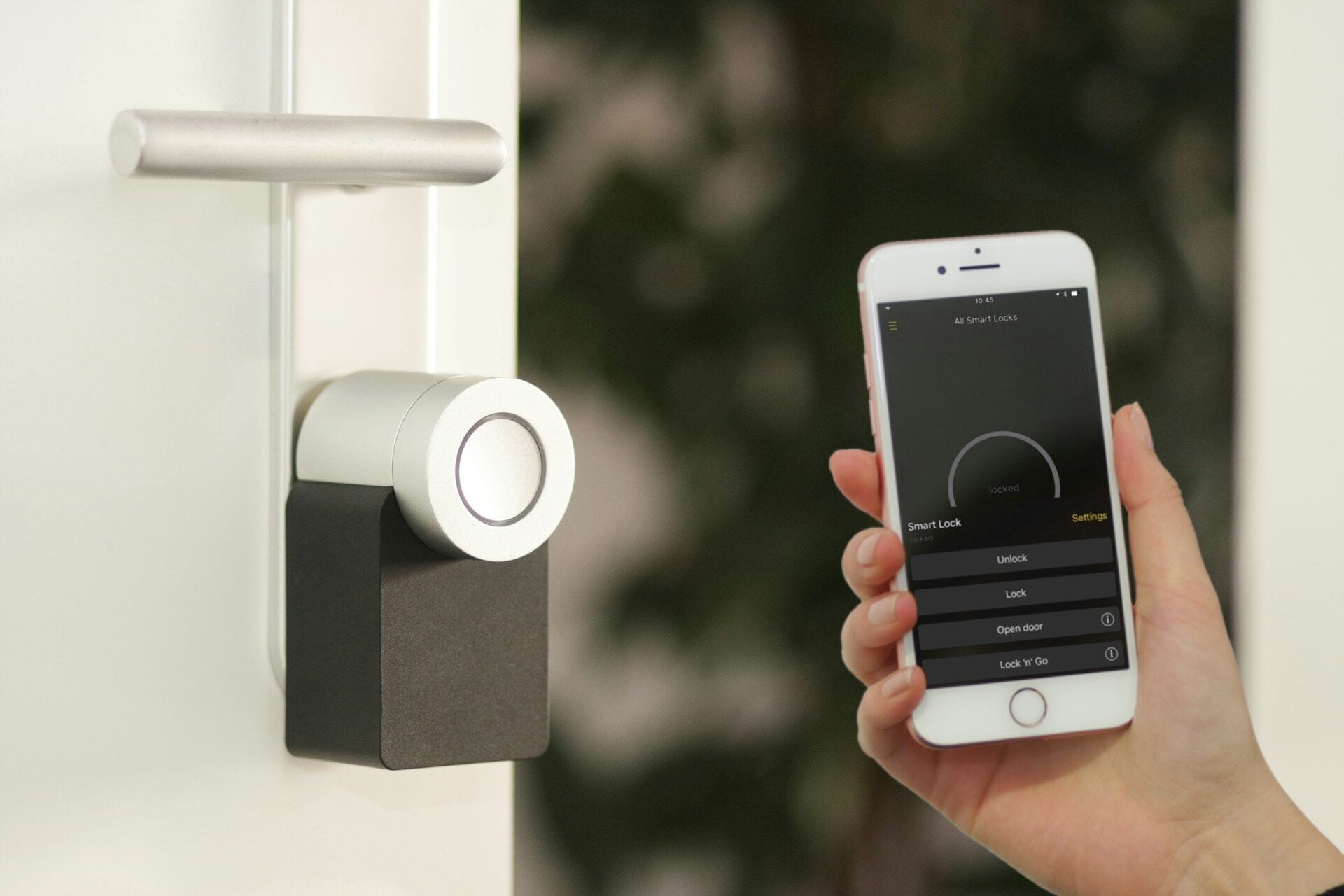
Anything saved inside the lock keeps working. That means PIN codes, fingerprints, cards and the normal metal key. Your phone can also still open some locks when you stand near the door. It uses Bluetooth, a short-distance link between phone and lock.
This works because many locks save your codes and fingerprints inside the lock, not on the internet.
Yale’s user guide for its YDM4109 digital lock is one example. It shows how to save up to 100 fingerprints and 100 PIN codes. You do this on the lock itself. The Bluetooth part for the Yale app is extra. You buy it only if you want it. The guide also lists an emergency metal key. It also shows a spot to touch a 9V battery if the lock’s batteries run flat (Yale YDM4109 manual). So this lock is a smart lock without internet from the start. You add the internet link only if you want it.
Lockly is a smart lock brand from the USA (Lockly). Its help page says your fingerprints are saved on the lock itself. They are saved in a secret code form, not as pictures (Lockly support).
The August table also shows that every August lock can open by Bluetooth when you stand near it. No internet is needed (August: How it works).
Europe also has a written guide for smart door locks. It is called ETSI TS 103 815. It says a smart lock must keep working at the door when the internet is lost. It must also go back to normal when the internet comes back (ETSI TS 103 815). In simple words: no internet should not mean no entry.
Practical takeaway: Give every family member their own PIN or fingerprint on the lock. Then nobody needs only the phone app to get in. Worried about hacking? A lock that never goes online is harder to attack. We explain this in Can a smart door lock be hacked?
Can a smart lock fail because of Wi-Fi or internet problems?
Yes, the smart features can fail. App features work through the lock company’s servers. Sometimes those servers stop working. A well-made lock still opens at the door. A badly made lock can stop working at the keypad too. That is why a key or another backup is important.
On 20 October 2025, Amazon’s internet computer service broke down. It is called Amazon Web Services, or AWS. Thousands of apps use it. When it broke, many apps could not reach their servers. So many smart home products stopped working. The news site Matter Alpha said the problem lasted about 15 hours. It started at one of Amazon’s big computer centres in the USA. Alexa and Ring went offline. But some homes had smart systems that work inside the house, without the internet. Matter Alpha said those homes “were unaffected”. Some SmartThings users could not use their phone app. But their automatic settings at home kept running (Matter Alpha).
The LockState case in August 2017 was worse. LockState is a smart lock company. It sent a bad software update to its older 6000i Wi-Fi locks. The locks were also sold through an Airbnb program for hosts. About 500 locks were hit. The keypads stopped working. The locks could not connect to the company’s servers again. So the company could not fix them over the internet. Owners had to post part of the lock back for repair. That took 5 to 7 days. Or they could wait 14 to 18 days for a new one. The normal keys still worked (BleepingComputer). One Airbnb host kept his keys in a small key box in the hallway. He told TechCrunch he could still open his doors because of this (TechCrunch).
The lesson from both cases is simple. You cannot control the internet. A smart door lock offline should still work as a lock.
Practical takeaway: Choose a lock that opens without the app. Keep the metal key in a safe place you can reach from outside, like that host’s key box. Do you rent out a unit? Plan how guests can get in if the app stops working. Our Airbnb lock notes cover the basics.
What should I check before buying?
Ask one simple question: “If my internet is down, how do I open this door?” Then check these five points:
PIN codes saved on the lock. PIN codes and fingerprints should be saved inside the lock, not only on the internet. The Yale and Lockly examples above work like this.
A metal key and/or a 9V emergency battery point. The key is your last backup if the electronic parts fail. LockState owners learned this. The 9V point helps when the batteries are flat.
Bluetooth for using your phone near the door. Bluetooth lets your phone talk to the lock directly, without internet.
No internet needed to unlock. Ask the seller if any way of opening needs the company’s servers. The answer you want is “no”.
Test every way of opening with the Wi-Fi off. Ask the seller to switch off the Wi-Fi. Then ask to see the PIN, fingerprint, card and key working.
Practical takeaway: If a seller cannot answer these five points clearly, look at another lock.
Closing tip
Once in a while, switch off your home Wi-Fi for ten minutes. Then open your door in every way your family uses. If one way fails, you find out on a calm day. Not at midnight in the rain.
If you are choosing a front door lock for a Kuching house, a shop, or choosing for a client’s unit, you have probably heard both extremes: “smart locks get hacked in seconds” and “smart locks are safer than keys.” Neither is accurate. You need the whole full story.
This article sits next to our earlier article on whether a smart lock can be hacked. Here we answer are smart door locks safe, what smart door lock security actually rests on, and how a smart lock vs traditional lock choice looks like when you actually care about your doors as the person who stays behind the door, and not a sales pitch from a salesman’s perspective.
Are smart door locks safe?
Short answer: Yes, safe enough for ordinary homes and light commercial use—only if you choose a reputable brand (those that provide continuous updates for both software and firmware), install it on a solid door and frame, and manage PINs, cards, and guest access like you would manage spare keys. But…a smart lock is not magic armour. It is a lock added with electronics. One research used an “unsophisticated cyber attacker–burglar” to attack 18 domestic smart security devices (using 433 MHz radio, Bluetooth, and RFID). Out of 18 smart security device tested, the attack had worked on 16 of them! (89% successfully attacked!)
Above case is a real published case: University of Hertfordshire researchers (Allen, Mylonas, Vidalis, and Gritzalis) built an “unsophisticated cyber attacker–burglar” model and tested domestic smart security devices over 433 MHz radio, Bluetooth, and RFID. At least one high-criticality attack worked against 16 of 18 devices. Their work produced 14 published CVEs. That is not a Kuching crime wave—it is a lab sample that shows many consumer products fail basic wireless checks. Source: Smart homes under siege…, Computers & Security (2024).
Europe now treats residential smart door locks as higher-stakes consumer IoT. ETSI TS 103 815 V1.1.1 (January 2024) builds on ETSI EN 303 645 and asks for encrypted, authenticated communications, updatable software, a way to lock or unlock if power dies, and attention to mechanical security—not only the app. A later BLE study of 18 commercial locks found 14 still vulnerable to the attacks examined, with the authors stating the flaws could affect over 20 million users (IEEE TCE, Silent Intruders…). Those numbers describe tested products, not every lock sold in Sarawak. There is no honest public “hack rate” for Malaysian homes.
Practical takeaway: Buy brands that still update firmware after the purchase, set a unique admin password (and 2FA where offered), keep the door and strike strong, and revoke guest access when people leave.
Can a smart door lock be hacked?
Short answer: Yes, in principle. That does not mean every terrace house on your street will be opened from a café Wi-Fi this week. Most published demos need proximity(near distance), special tools, or a weak product—not some random stranger on the street with only a phone number. But still, we want to be honest and tell you that hacking a smart lock is possible.
In 2025, researchers at UC San Diego (paper at USENIX WOOT) reverse-engineered a very big and prominent Door Lock Brand – Master Lock Bluetooth Deadbolt D1000. They showed a nearby attacker could record a full BLE unlock session and replay it to open the lock again. They also showed a former guest could keep unlocking after access should have been revoked—Master Lock told them the D1000’s access profiles could remain valid for up to nine months because of an earlier clock-related firmware decision, with mitigations planned. Source: Diao et al., No Key, No Problem; summary: https://bit.ly/3VdVrre.
Such ‘session reuse’ weakness is not unique to one brand. NIST’s entry for CVE-2022-46480 describes incorrect session management on another big brand, Ultraloq UL3 BT (2nd Gen, firmware 02.27.0012): an attacker in Bluetooth range could sniff unlock data and reuse it while the session stayed open. Companion technical report: arXiv:2312.00021. NCC Group’s work on Nuki products found issues that could let someone open or disrupt a lock; Nuki released patches (SecurityWeek coverage).
Practical takeaway: How to realisticly lower the risk for you: patchable firmware, no shared admin PIN, guest codes that expire, and turning off always-on auto-unlock if you do not need it. Read more: Can a smart door lock be hacked?.
Smart door lock security: what actually matters
A smart door lock’s strength is dependent on 3 factor: the software—credentials, radio/app path, and the steel in the door. A good and strong advanced fingerprint reader – yes it is strong, but if the door lock latch is weak, the overall lock is still low security. A boring PINCODE lock, but the locking is a reinforced-multipoint-bolted lock on a solid door, this is be the safer choice.
Also, the access card. The same Hertfordshire team’s technical report on a big lock brand, Yale’s Conexis L1 (CVE-2023-26941) shows how MIFARE Classic-class RFID tags can be cloned when an attacker gets brief physical proximity to the original card. Their write-up describes recovering keys and duplicating tags in about 20 seconds of access to the original tag (arXiv:2312.00021). Classic’s Crypto-1 cipher has been publicly broken since 2008; correctly configured DESFire EV2/EV3-class AES credentials are far harder to clone (overview).
Some opinions believe the door lock can only be attacked by someone near the door lock. But distance is not really a deterrent. Attacker can attack a smart door lock even from overseas, even from 1,960KM away. In an ACM WiSec ’22 paper, Staat and colleagues used an analog bluetooth relay and unlocked a Nuki Smart Lock 2.0 while bridging about 65 m between the lock and an authorised phone (DOI 10.1145/3507657.3528536; arXiv:2202.06554). On the access-control side, researchers relayed HID Seos over the public Internet and unlocked a lab door with a card about 1,960 km away (ePrint 2023/450). Fox-IT’s advisory is blunt: treat passive proximity unlock with caution; prefer a deliberate tap/button, stronger ranging (e.g. UWB where available), or disable auto-unlock (Fox-IT).
Fact with source: ETSI’s smart-lock vertical explicitly lists credential copy, replay, and relay among credential-related threats, and ties cyber rules to mechanical building-hardware practice (TS 103 815, threat notes and Annex C).
Takeaways: For day-to-day smart door lock security in Kuching, we still care more about bolt throw, strike fit, humidity-tolerant hardware, and whether parts will still be available in five years—see why some locks are so cheap and five ways to tell a smart lock is good. ETSI also expects you can lock or unlock if power is lost (TS 103 815, SDL 5.9-1)—battery contacts and/or a mechanical key override. A weak cylinder becomes the weak link no matter how good the fingerprint module looks (fingerprint reader differences).
Smart lock vs traditional lock
Neither wins by default. A quality traditional cylinder on a reinforced door often beats a no-name “smart” lock with weak cards and no updates. A durable smart lock with deletable credentials, honest logs, and a proper install often beats a worn knobset and a key under the mat.
Look again at the Master Lock D1000 findings: convenience features (temporary guest access, audit logs over BLE/phone) became attack surfaces when session handling and revocation were weak (WOOT paper). Traditional keys do not have that exact failure mode—but they also cannot revoke a copied key without a rekey. Different tools, different messes.
ETSI frames residential smart locking as needing both cyber and mechanical controls (TS 103 815). Traditional mechanical locks have almost no internet attack surface; they still fail through picking, drilling, worn pins, or broken keys depending on the cylinder and bolt. Smart locks add PIN/card/phone revocation and optional entry logs—and add BLE, Wi-Fi, apps, and cloud paths that quality and patching decide. If you want mechanical-only options, start here: high-security mechanical door locks.
What to check before you buy (Kuching homeowners & contractors)
Short answer: Match the lock to the door, the people who need access, and who will service it in five years from now.
If you want a second pair of eyes on a model—or an install that respects latch, strike, and multipoint hardware—talk to Fine Lock Shop. We work with Kuching homeowners, shops, and project partners (contractors and interior designers). Browse https://bit.ly/4AFyVrE and smart digital door locks, or visit the showroom and ask us to explain trade-offs in plain language. We will not invent a “hack-proof” promise. We will help match risk, door, and budget honestly.